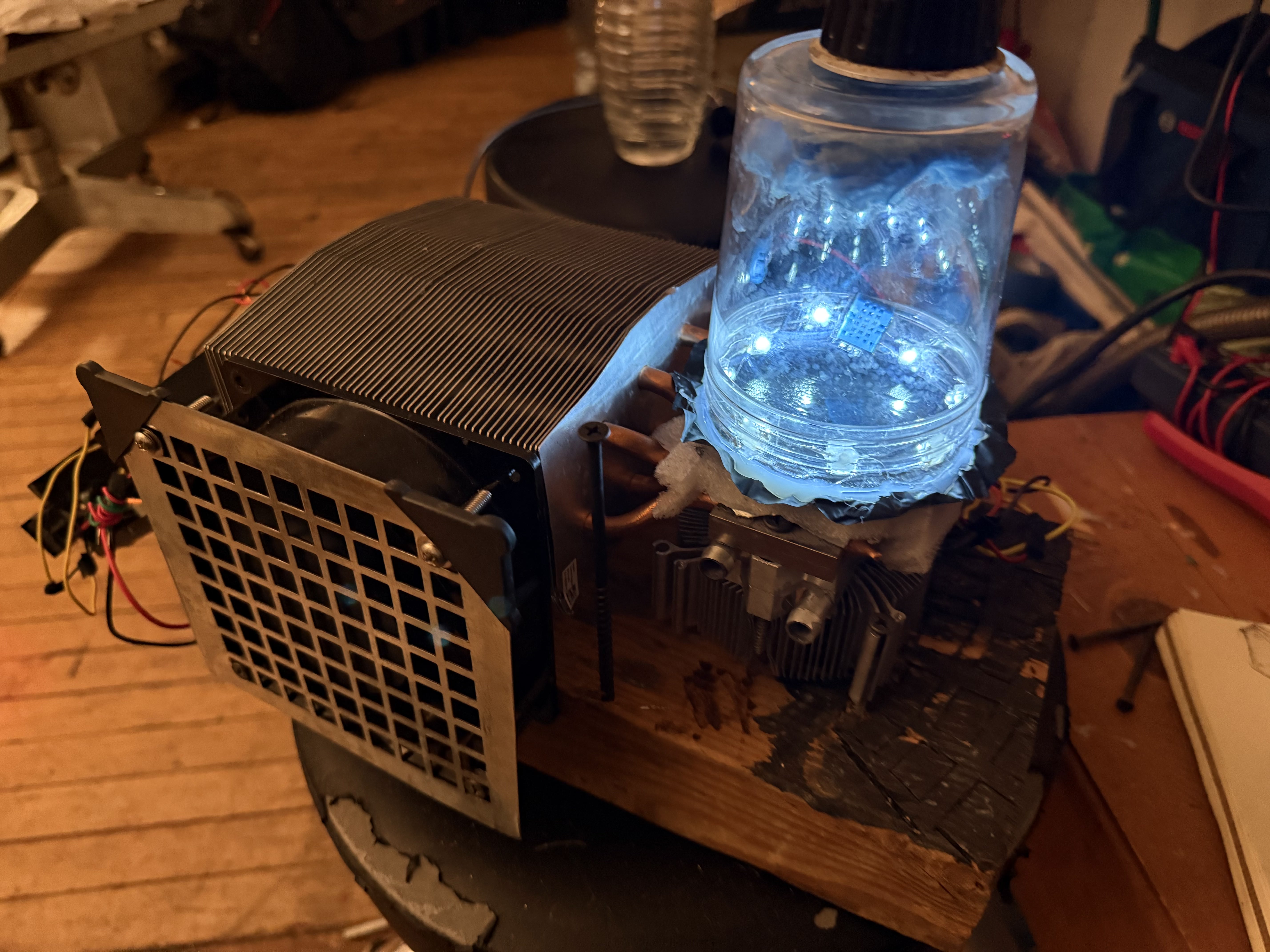
A cloud chamber is a particle detector used for visualizing the passage of ionizing radiation. This specific design utilizes a multi-stage thermoelectric cooling system (Peltier tiles) to achieve the extreme sub-zero temperatures required to create a supersaturated environment of alcohol vapor.
Unlike traditional chambers that require dry ice, this air-cooled version uses high-efficiency
heat sinks and fans to dissipate heat from the hot side of the Peltier elements. When a
charged particle passes through the chamber, it ionizes the vapor, leaving behind a
visible trail of droplets—effectively making the invisible visible.
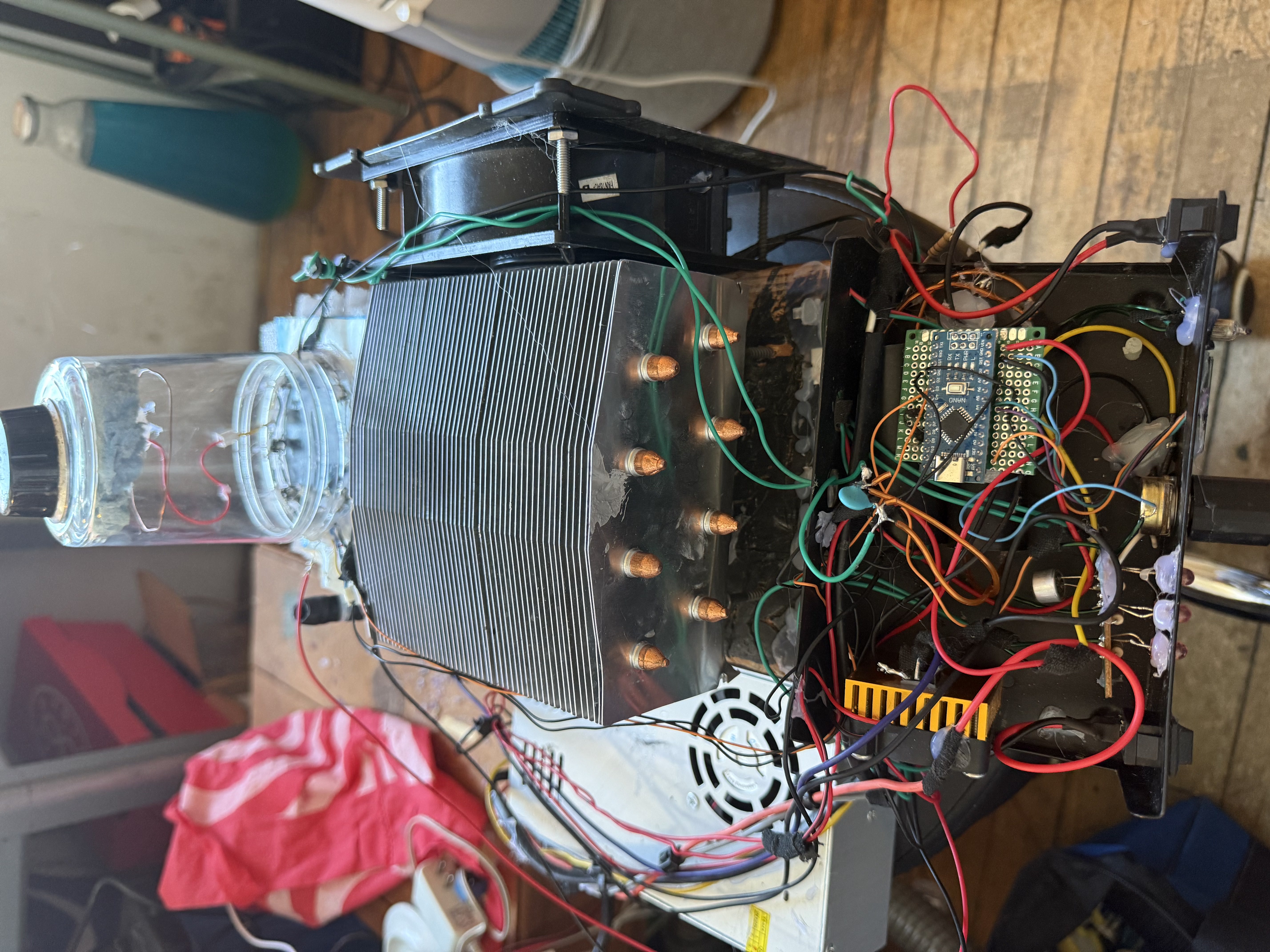
I created this DIY scientific instrument with majority found and scrapped parts.
The only items purchased were the OLED display, Arduino Nano, DHT11 Thermometer, and HV transformer.
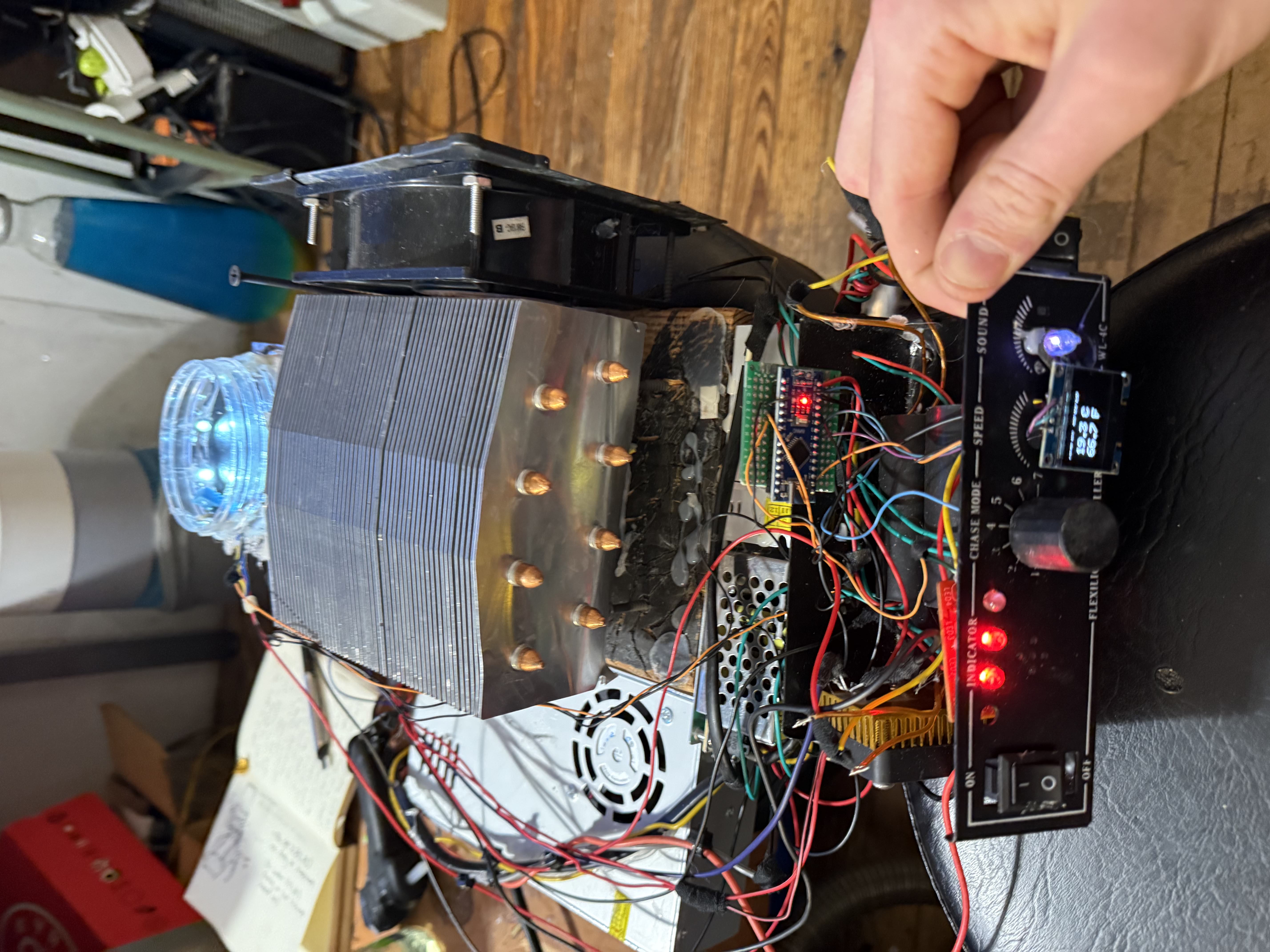
What makes my build unique is the user interface, scrapped from an old "Flexilight box" (whatever that is).
I implicated three indicator lights, (red LEDS). The first (1/3) when on, indicates activation of main power.
(2/3) when on signifies the high voltage field (36kv) is on.
(3/3) when on tells the user that the tempurature in the chamber (1-3 cm above ground plate) is 32F or less, (freezing).
The OLED also shows temperature in both fareinheight and celsius. There is also a little animation of clouds going past when the device is turned on.
(Just for fun).
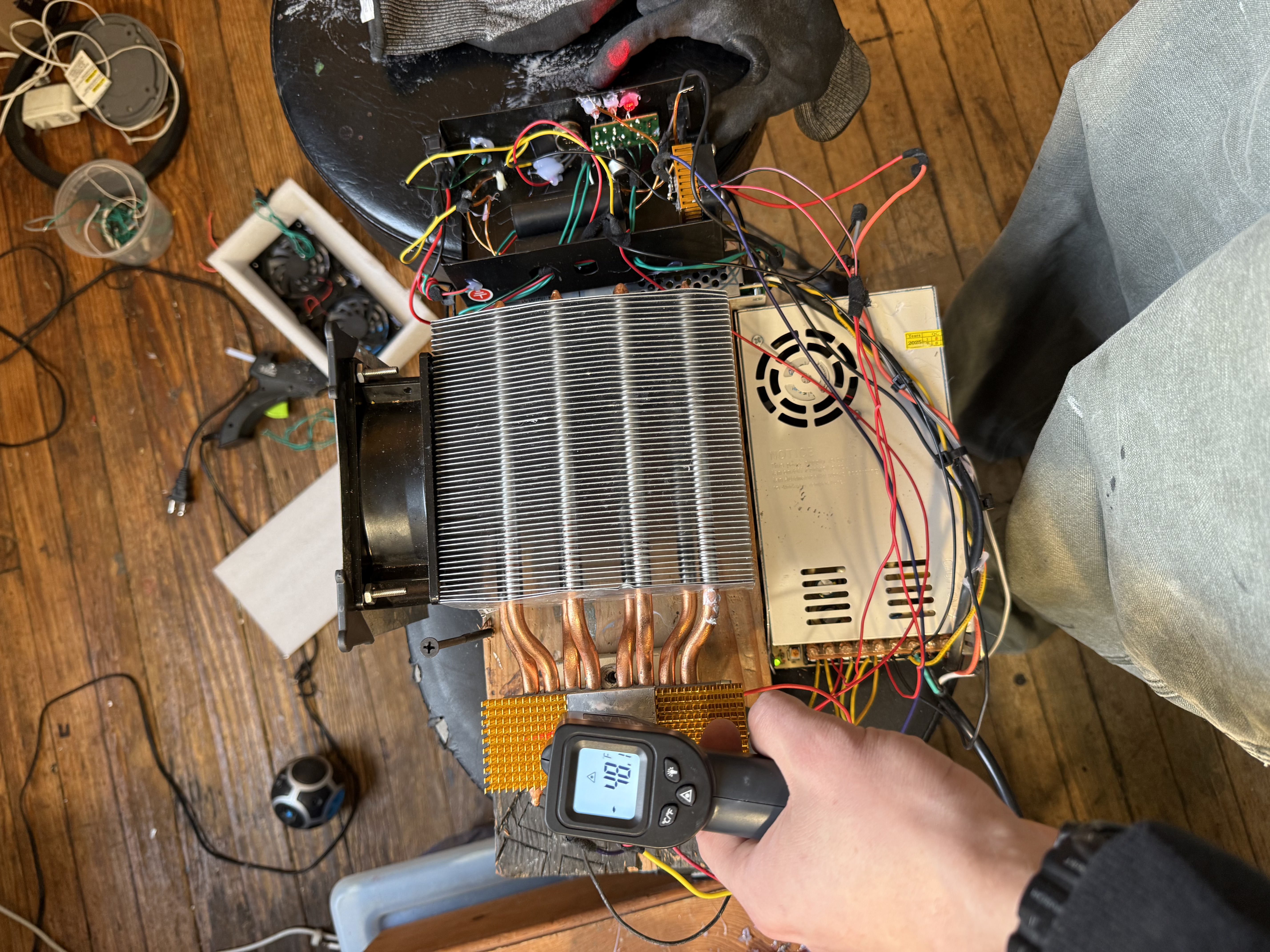
Hitting extreme temps of at most -50F was a challenge; in order to accomplish this, three peltier plates differing in required amperage were stacked on top of one-another (Thermal Cascade).
The nob in the middle, (potentiometer [10k] ) is used to change the temperature of the top most peltier plate, which is variable , (0-6Amps) I did this with PWM via MOSFET. To reach the coldest
tempuratures, I keep the top peltier plate at a constant 2A.
The second peltier plate in the stack runs at a full 6A, and the bottom one at 15A. This results in an insane amount of heatsinking required, hence the need for the large Al+Cu CPU heatsink and 120Vac fan.