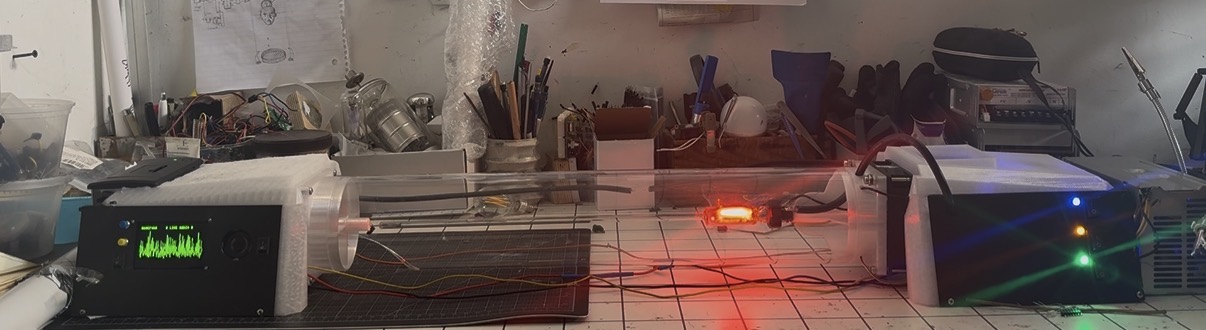
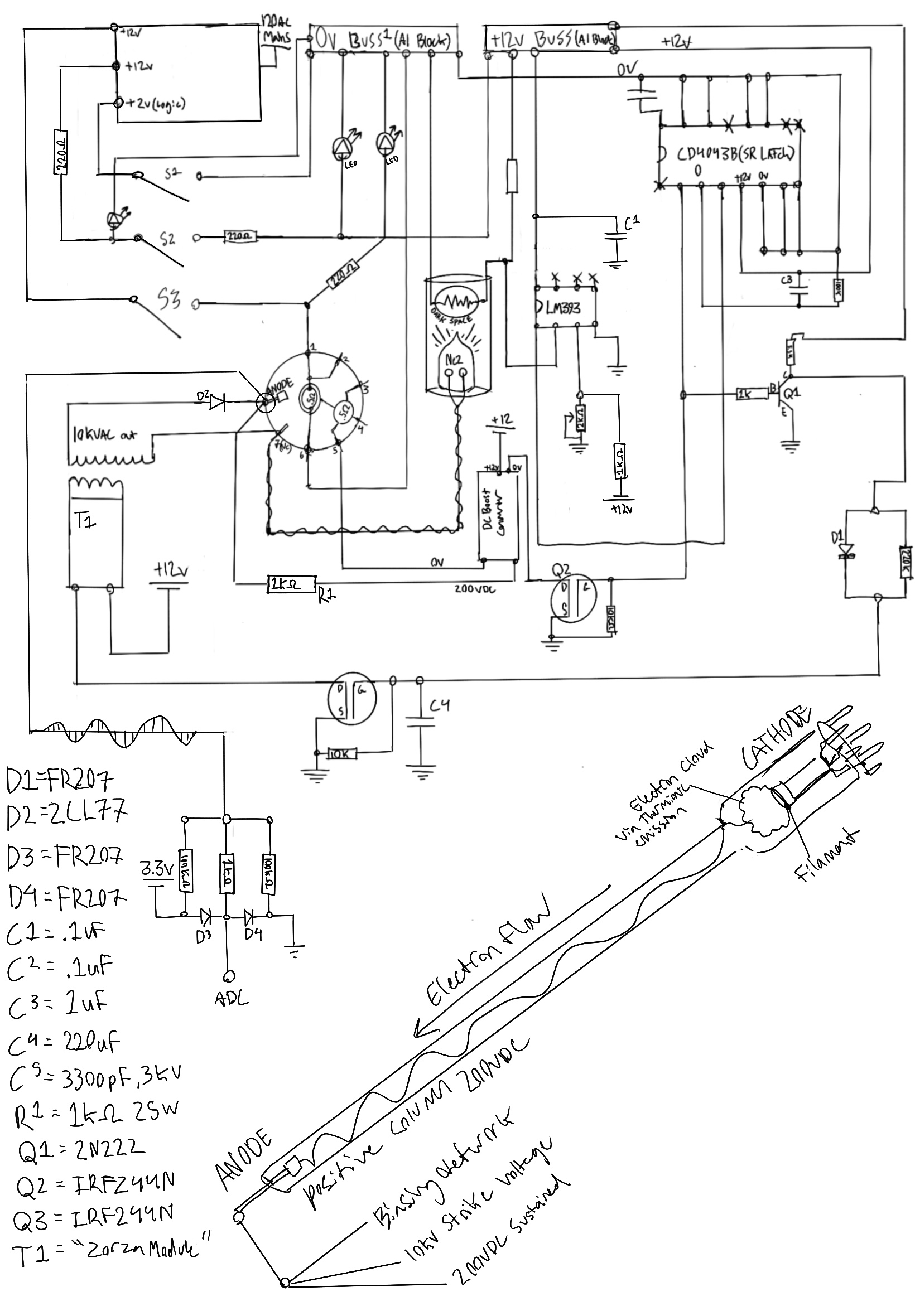
Using the GHS-2 Soviet noise tube, I created a scientific instrument in order to study ionization in neon. I created this instrument in 25 days for OpenSauce 2026. It also doubles as a random number generator: AC voltage fluctuations are decoupled from the anode side of the tube, biased, then fed into the ADC pin of an ESP32. The mV voltage fluctuations are caused by a combination of shot noise, ionization events, and other factors.
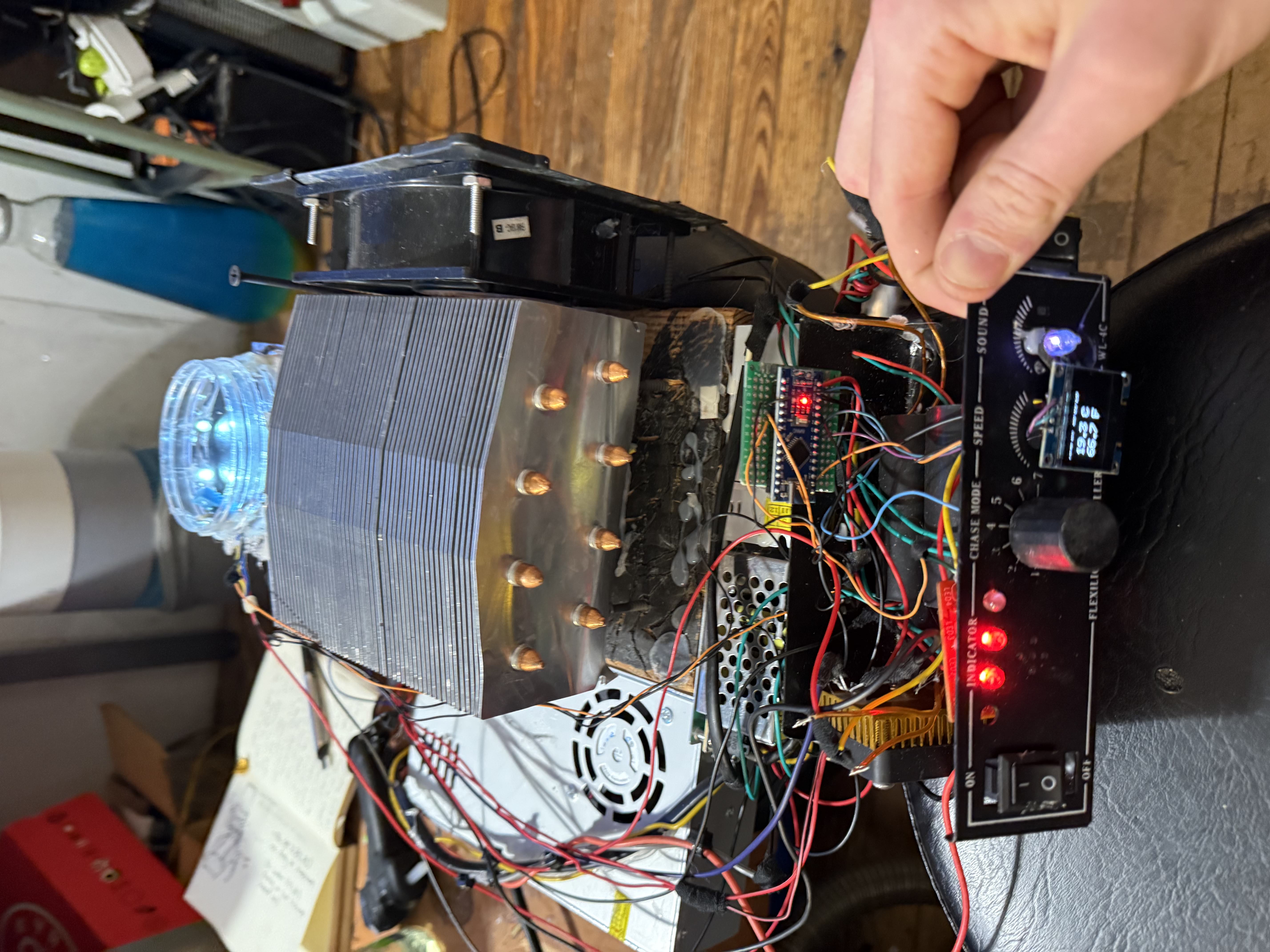
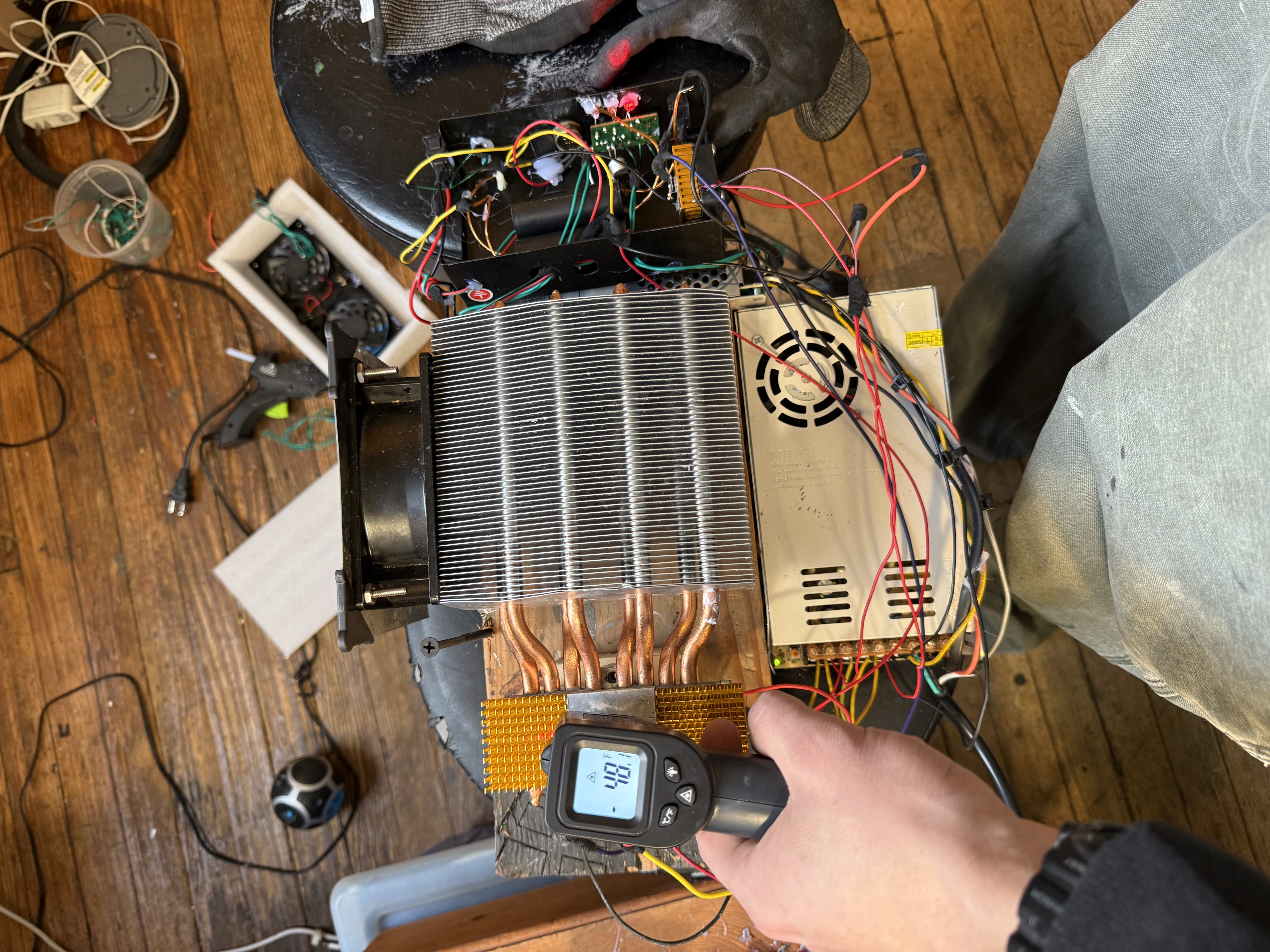
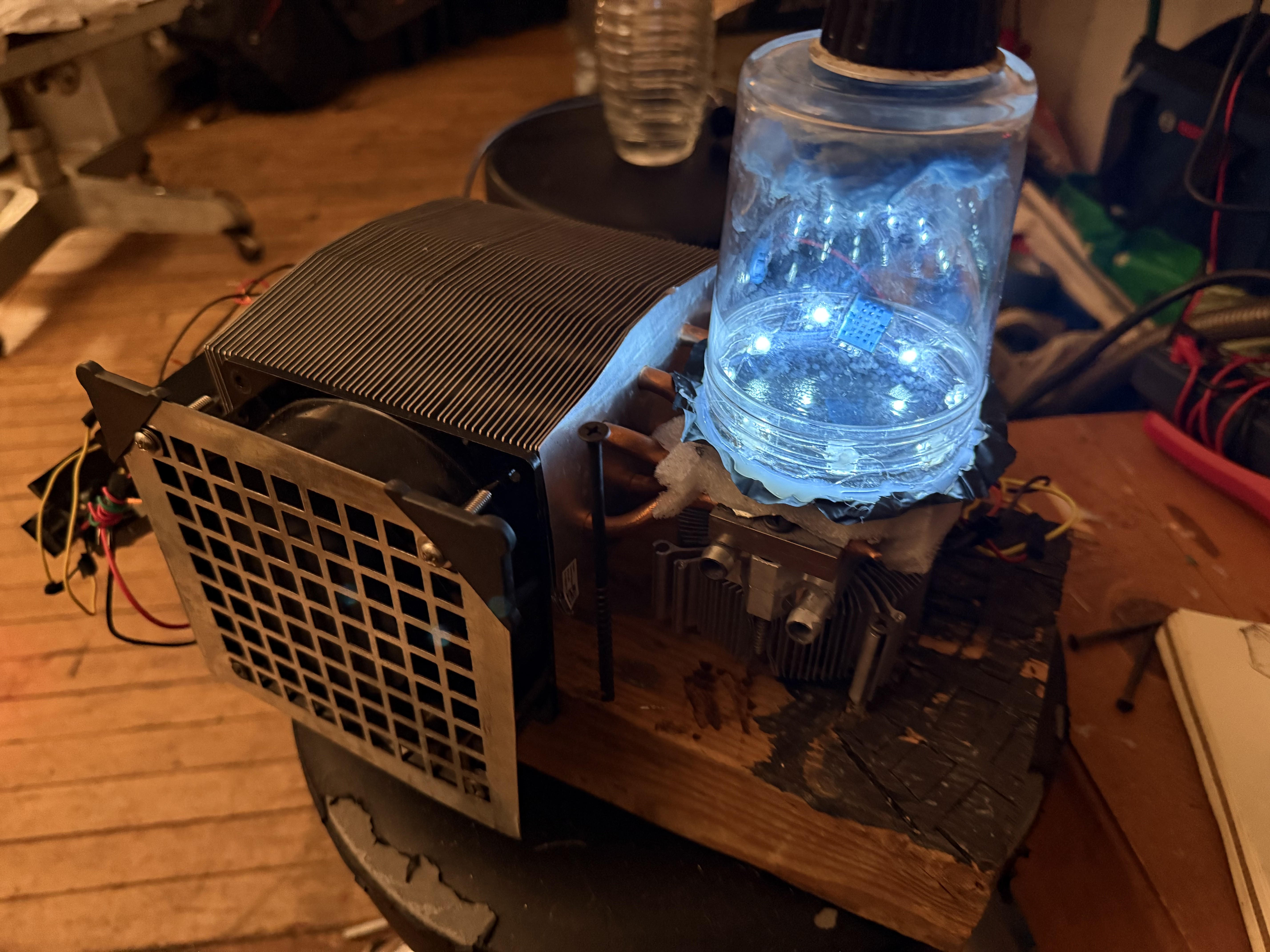
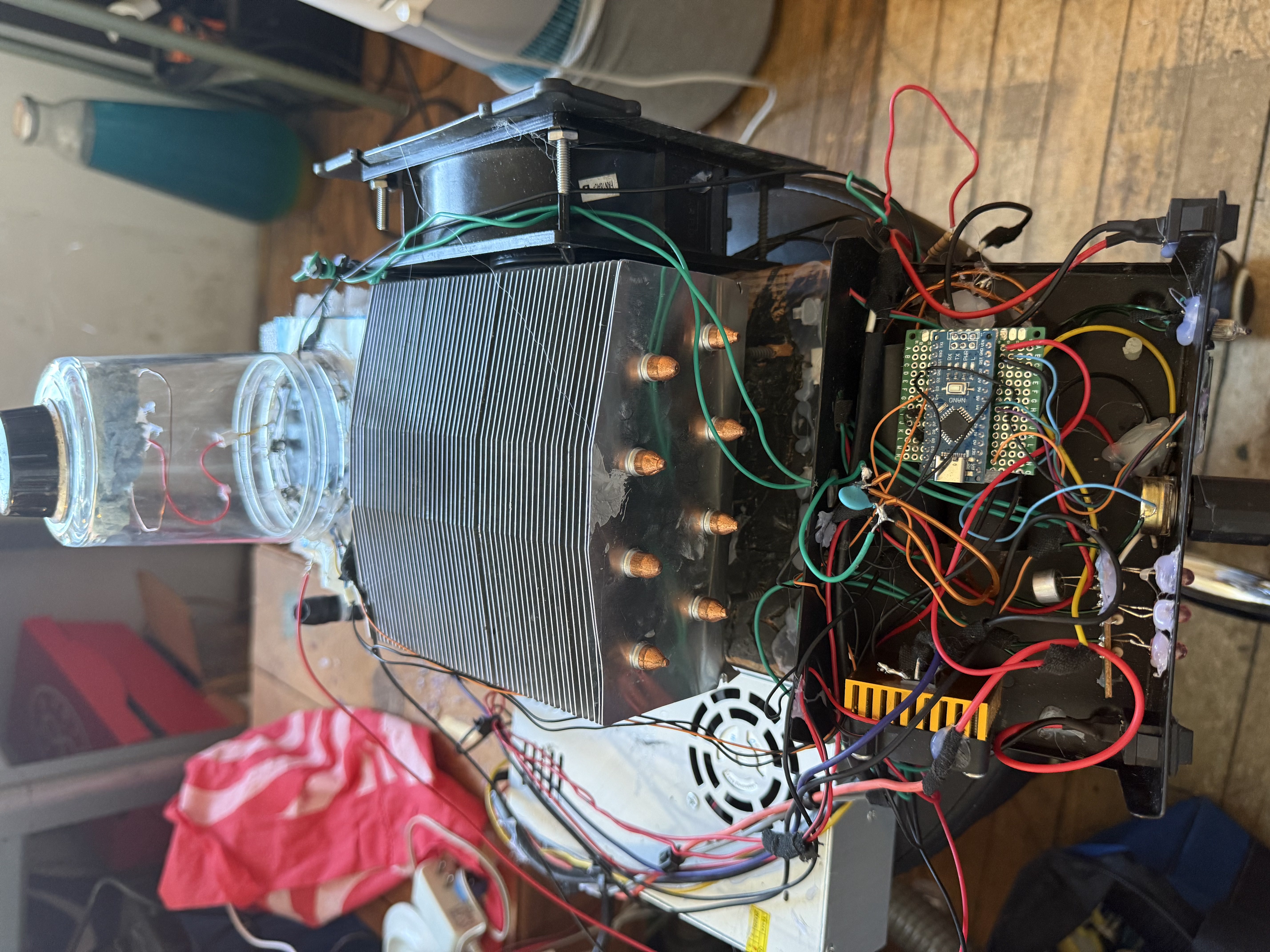
A cloud chamber is a particle detector used for visualizing the passage of ionizing radiation. This specific design utilizes a multi-stage thermoelectric cooling system (Peltier tiles) to achieve the extreme sub-zero temperatures required to create a supersaturated environment of alcohol vapor.
Unlike traditional chambers that require dry ice, this air-cooled version uses high-efficiency
heat sinks and fans to dissipate heat from the hot side of the Peltier elements. When a
charged particle passes through the chamber, it ionizes the vapor, leaving behind a
visible trail of droplets—effectively making the invisible visible.
I created this DIY scientific instrument with majority found and scrapped parts.
The only items purchased were the OLED display, Arduino Nano, DHT11 Thermometer, and HV transformer.
What makes my build unique is the user interface, scrapped from an old "Flexilight box" (whatever that is).
I implicated three indicator lights, (red LEDS). The first (1/3) when on, indicates activation of main power.
(2/3) when on signifies the high voltage field (36kv) is on.
(3/3) when on tells the user that the tempurature in the chamber (1-3 cm above ground plate) is 32F or less, (freezing).
The OLED also shows temperature in both fareinheight and celsius. There is also a little animation of clouds going past when the device is turned on.
(Just for fun).
Hitting extreme temps of at most -50F was a challenge; in order to accomplish this, three peltier plates differing in required amperage were stacked on top of one-another (Thermal Cascade).
The nob in the middle, (potentiometer [10k] ) is used to change the temperature of the top most peltier plate, which is variable , (0-6Amps) I did this with PWM via MOSFET. To reach the coldest
tempuratures, I keep the top peltier plate at a constant 2A.
The second peltier plate in the stack runs at a full 6A, and the bottom one at 15A. This results in an insane amount of heatsinking required, hence the need for the large Al+Cu CPU heatsink and 120Vac fan.
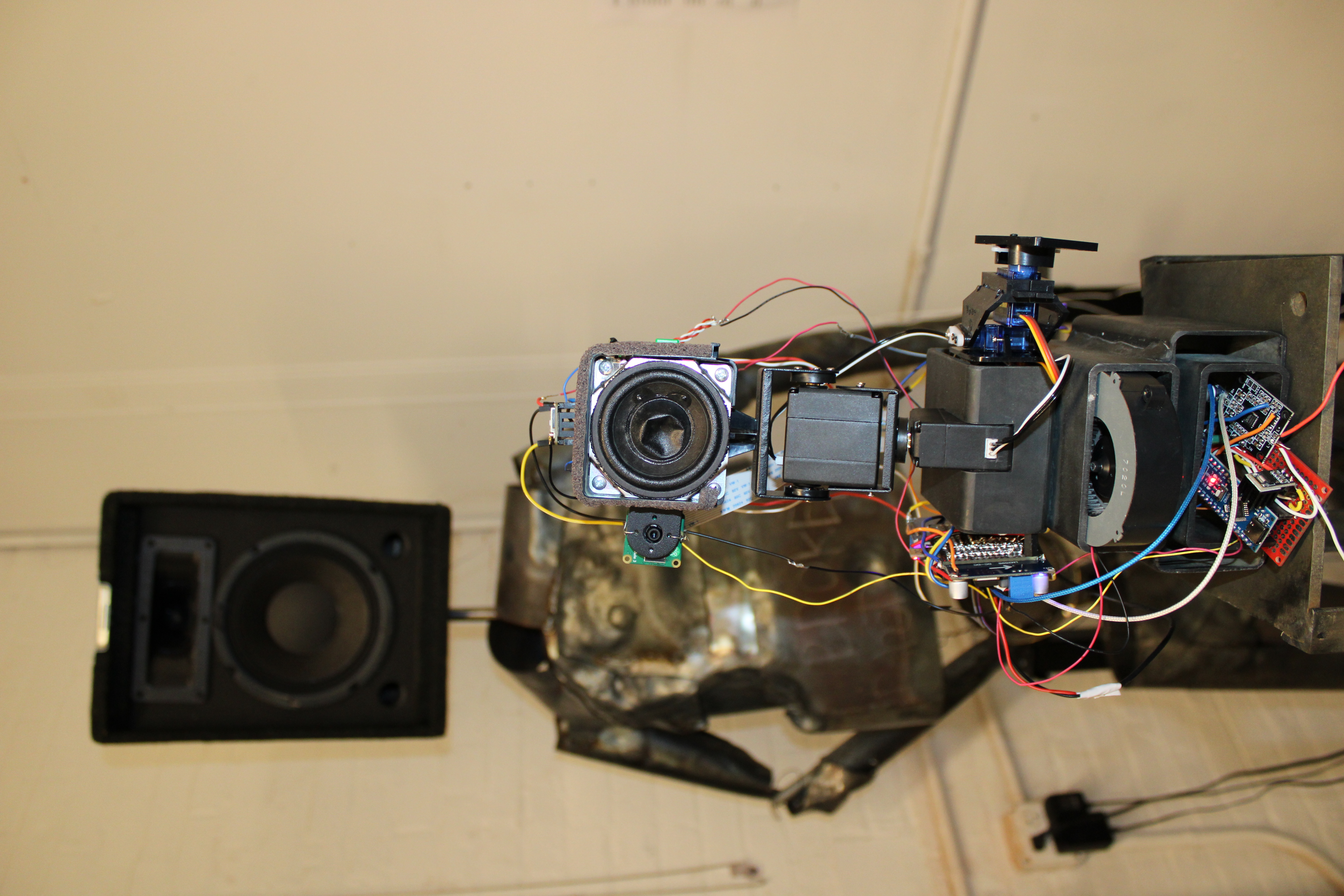

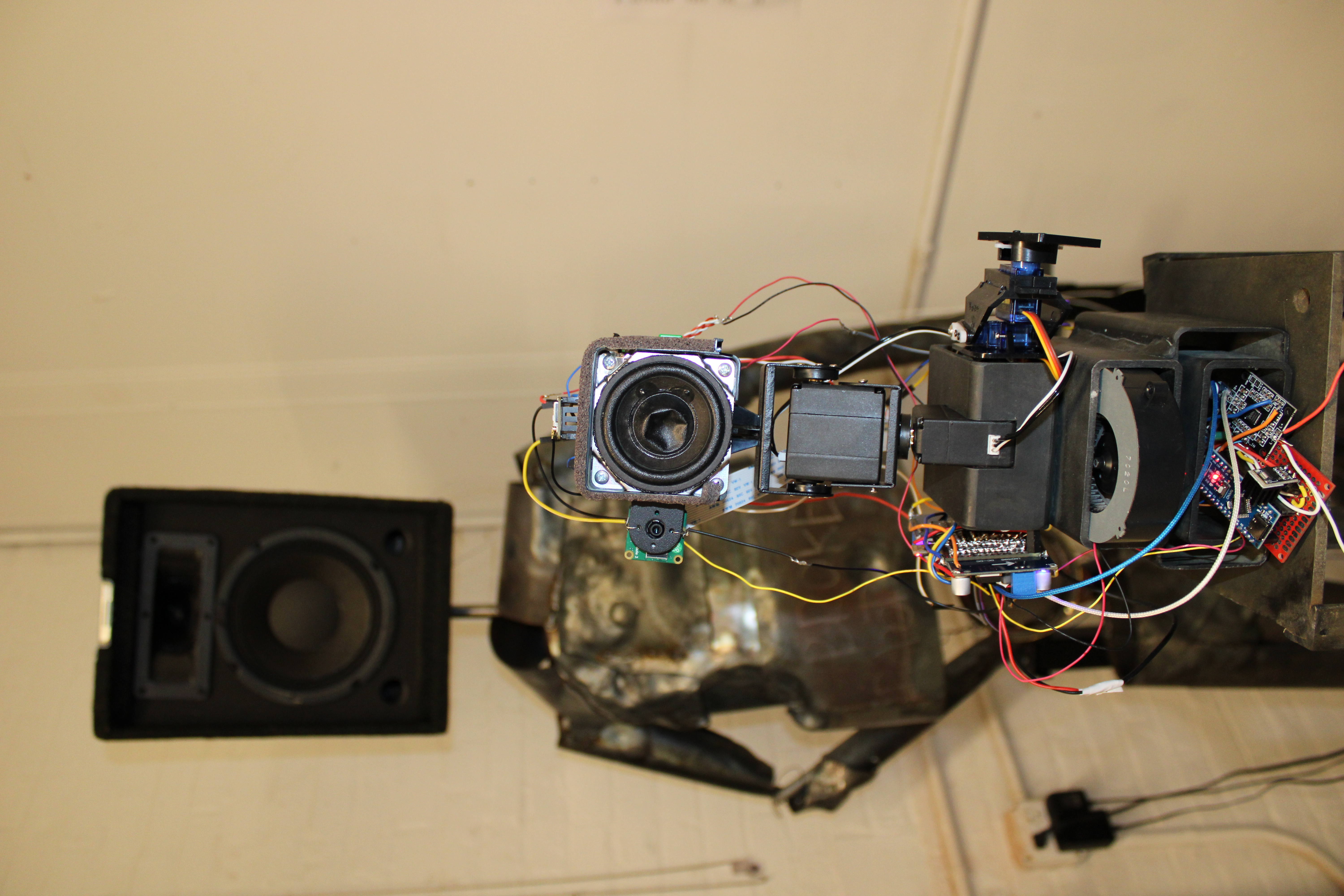
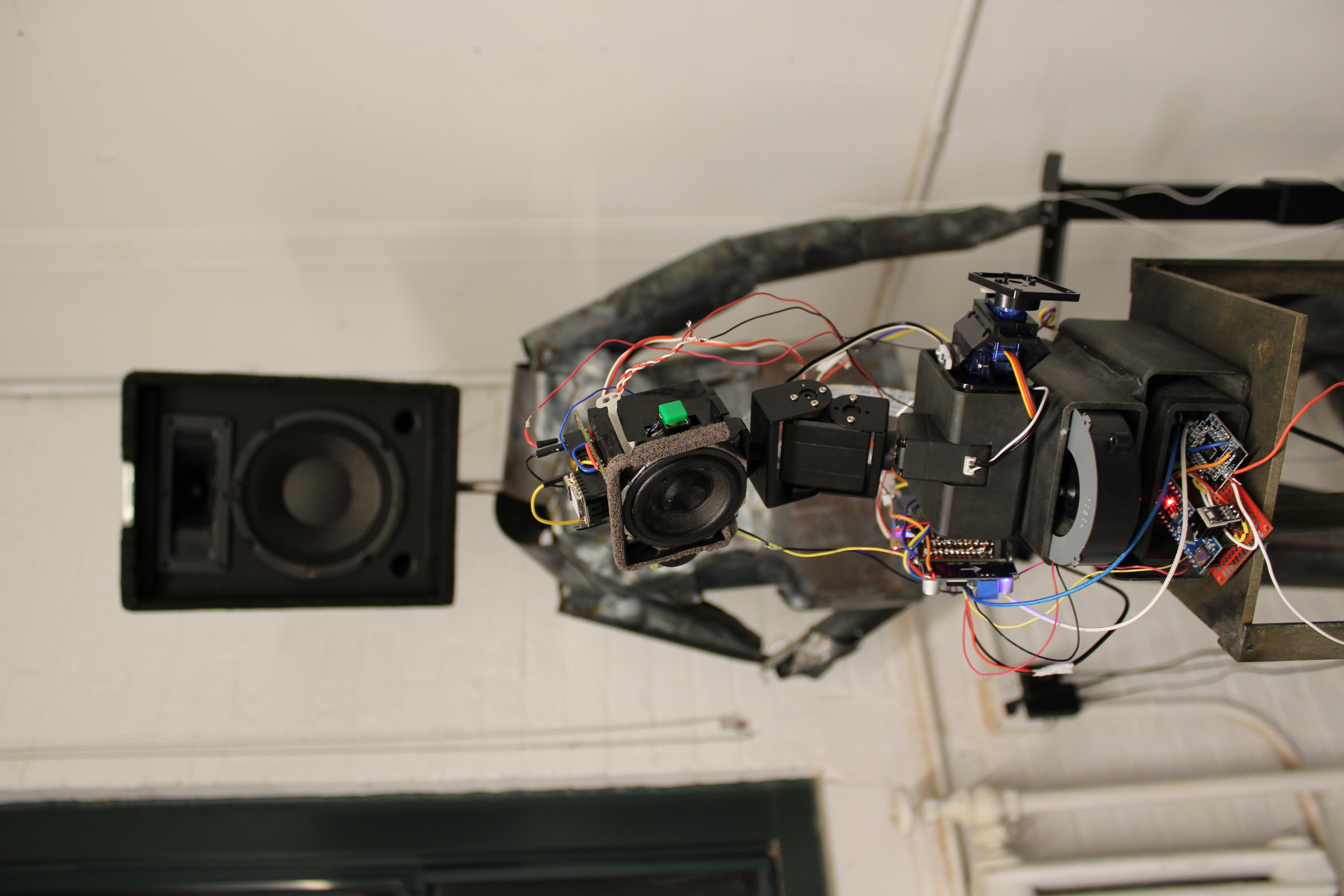
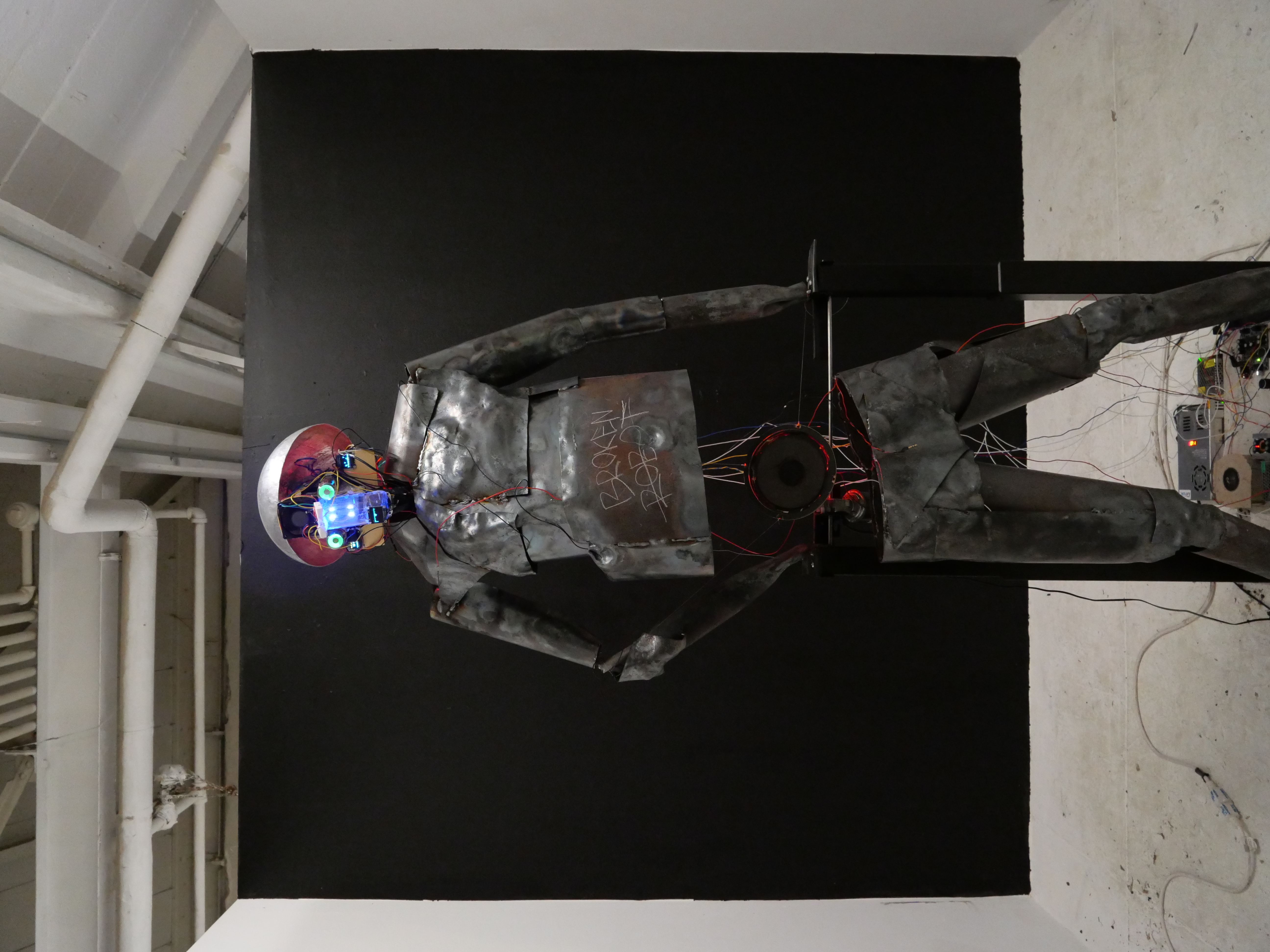
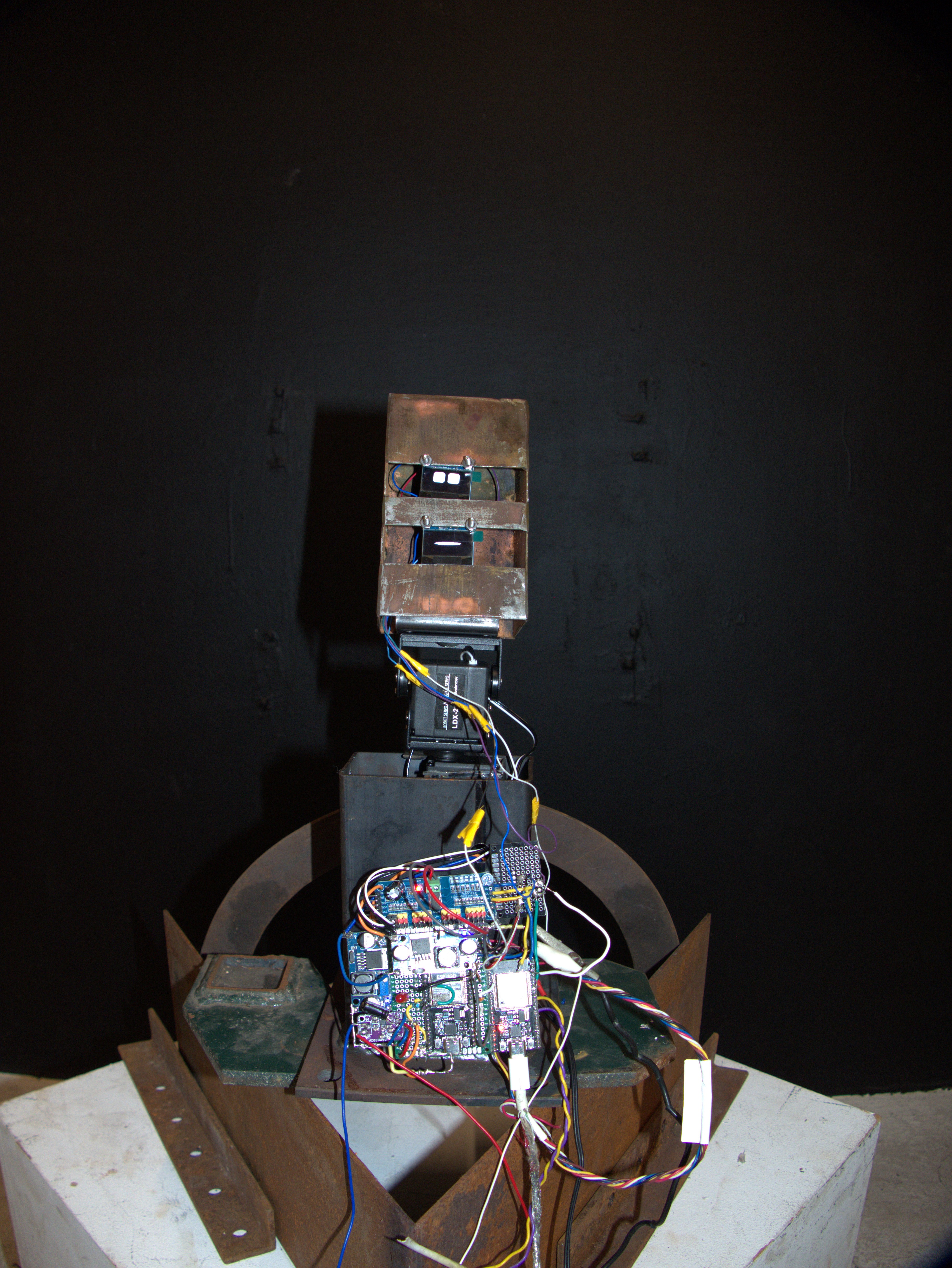
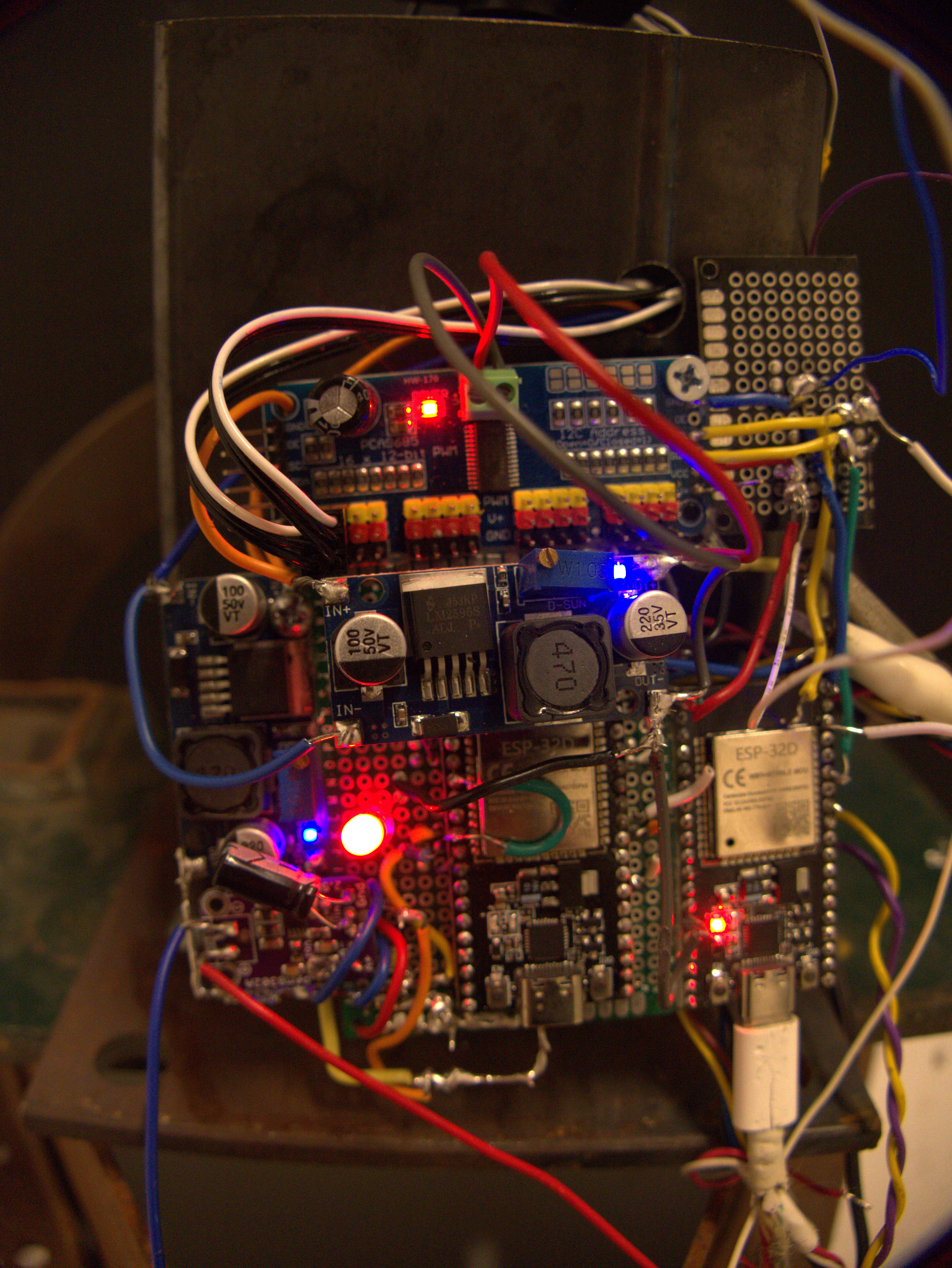
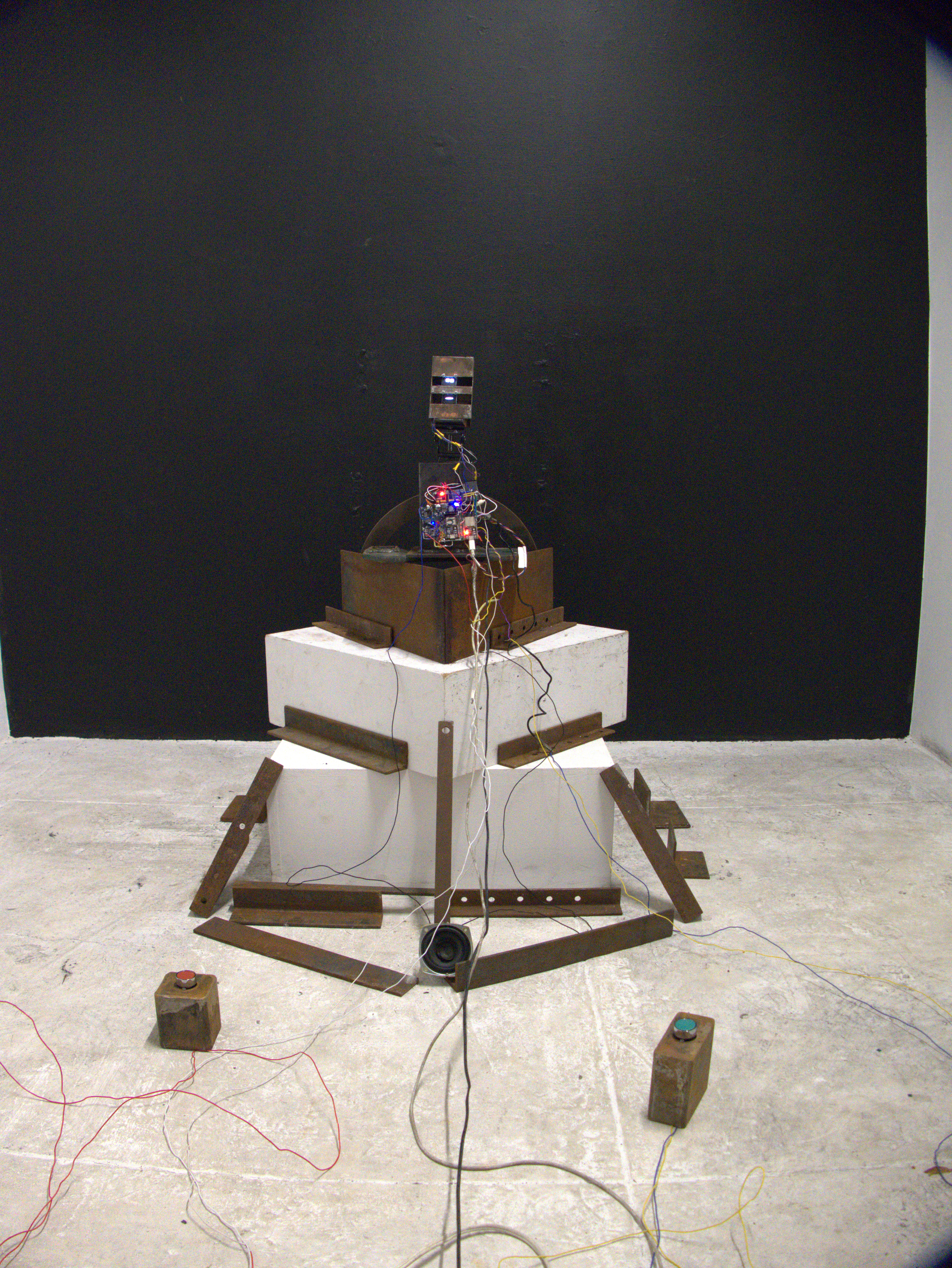
Interface is a face tracking robot I made using a Raspberry Pi 3 and a Seeed Studio XIAO ESP32-S3 Sense. I built it from a majority of scrapped or found parts. It has a fabricated steel base that I patinated, and a speaker as a face. The head has two 18g servos for tilt and pan movement, controlled by the XIAO ESP32-S3 Sense through a PCA9685.
In order to make a relatively smooth face tracking robot despite the Pi's slow processing, I decided to split the tasks. The Pi runs the machine learning model responsible for tracking faces, for which I used a variety of libraries including Google's MediaPipe. I used Claude Code for the majority of the coding, and unfortunately lost all of it when my old computer broke. While the Pi handles the heavy lifting of running the model, the XIAO S3 handles controlling the servos via PWM. The pipeline is as follows: the camera sends data to the Pi, the Pi identifies faces, then the Pi sends coordinates to the XIAO S3, which drives the servos accordingly.
When a face is detected, audio plays out of one of the Pi's GPIO pins into a mono amplifier (Adafruit PAM8302) through a series capacitor, and out through the speaker that forms the face. Interface says “Hello” when it first sees you, and “Come Closer” as you approach.
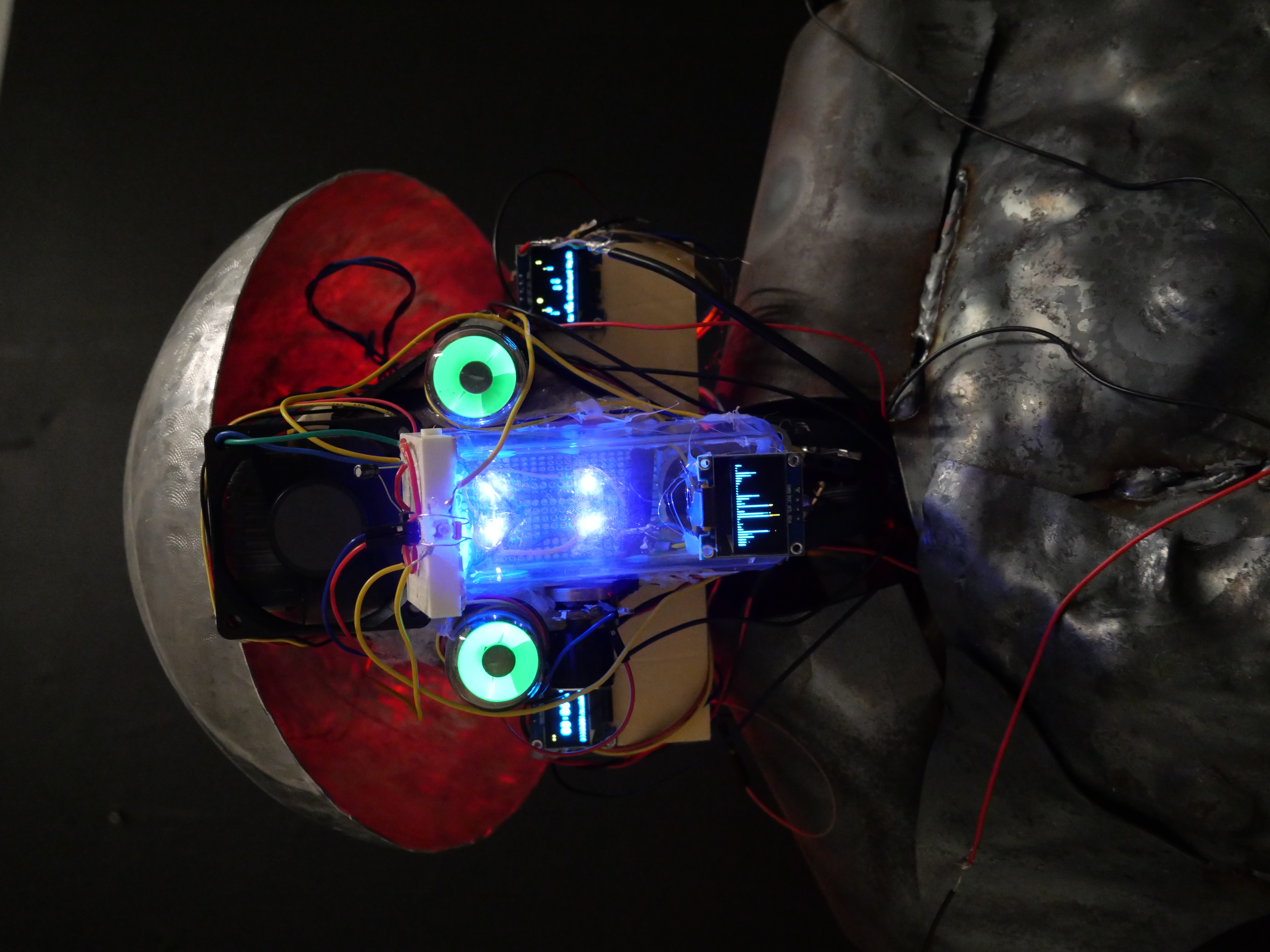
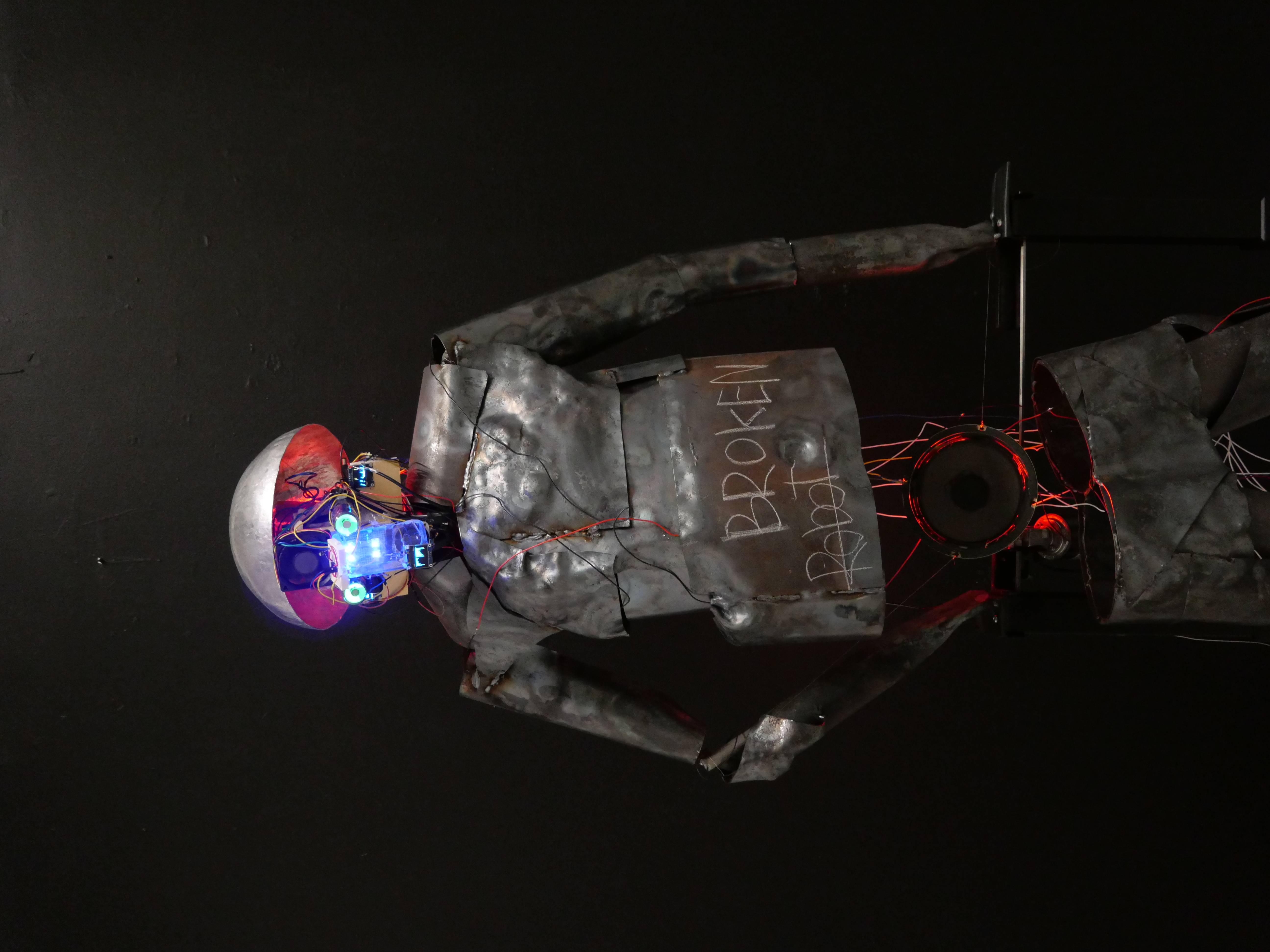
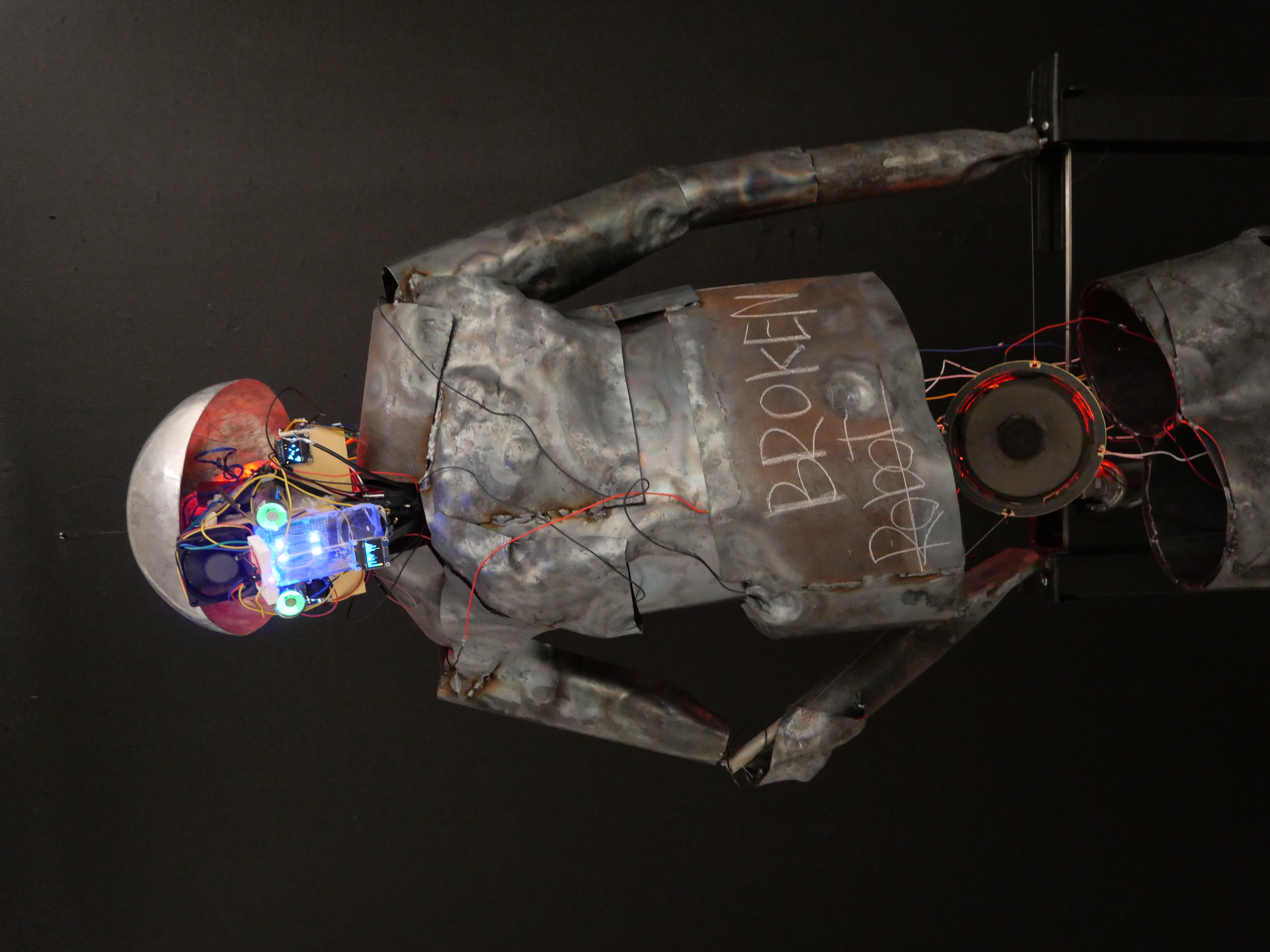
Steel, aluminum, RCA 1629 radio tuning tubes, arduino nano, PCB board, speaker, photoresistor, capacitors, resistors, LEDs, OLED display, 12vdc fan. 555 timer (astable mode), HV power supply (12v-500vdc), 12vdc power supply, 5vdc power supply, breadboard, 22 gauge solidcore wire, mechanical scews and bolts.
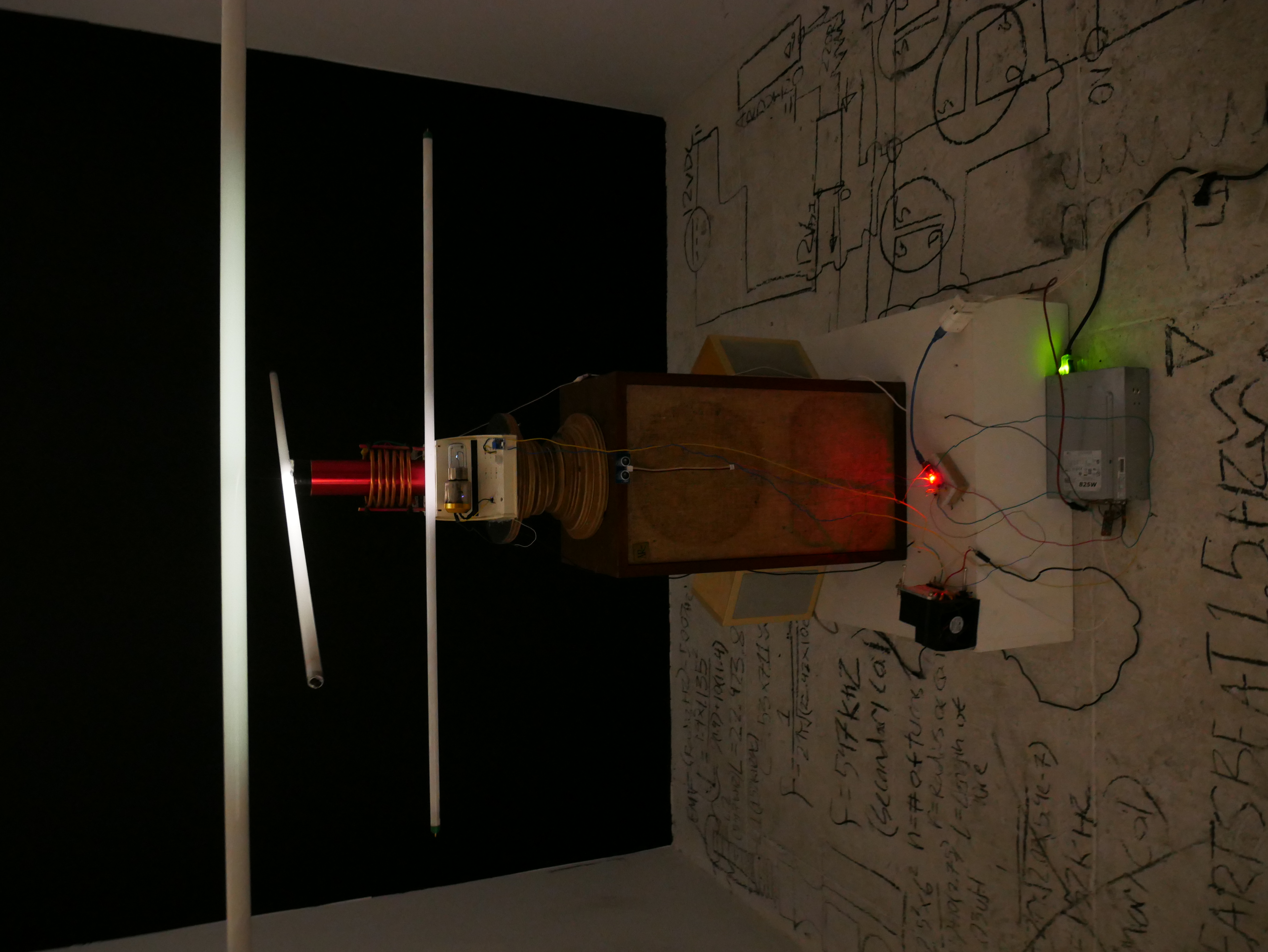
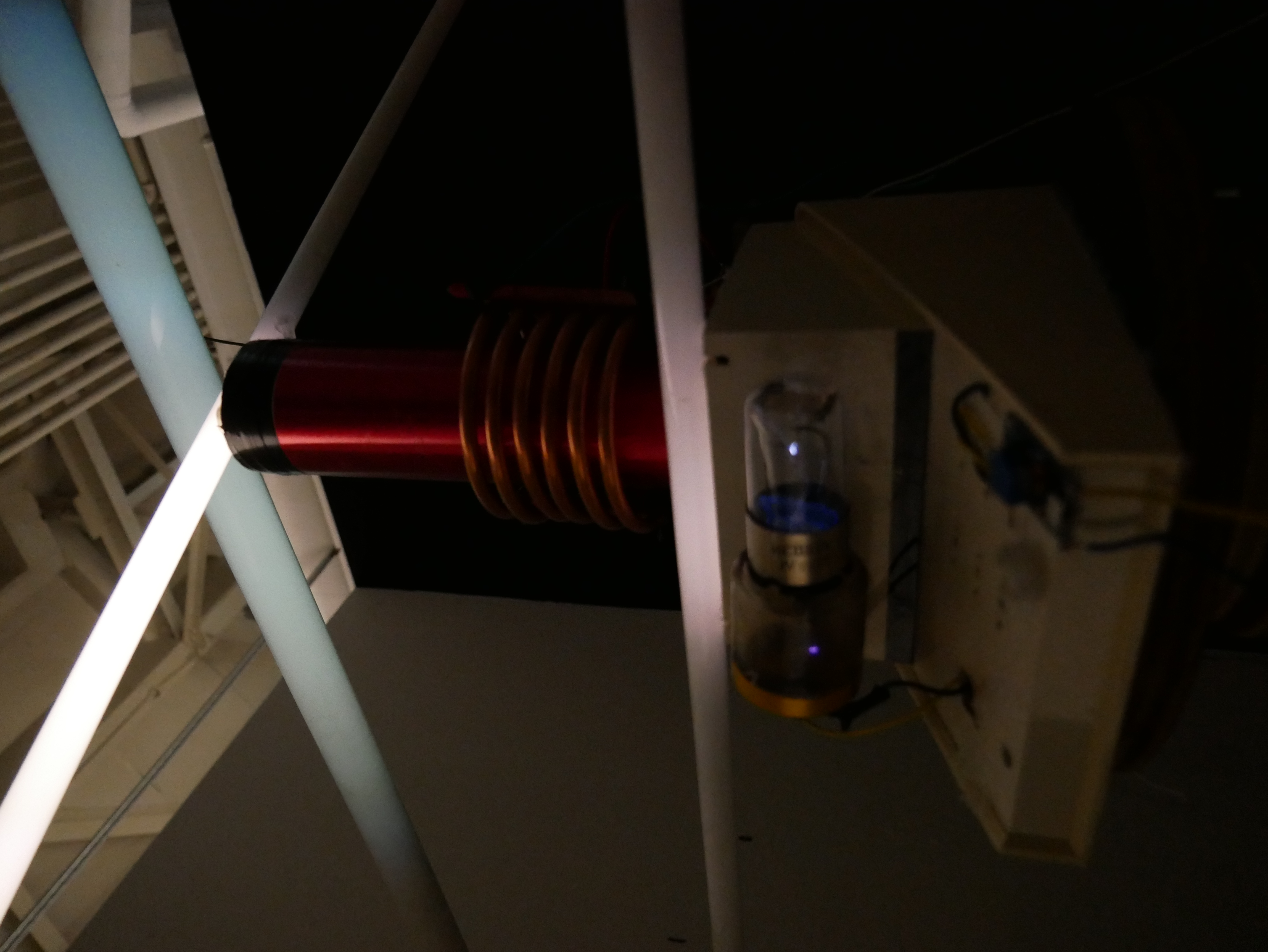
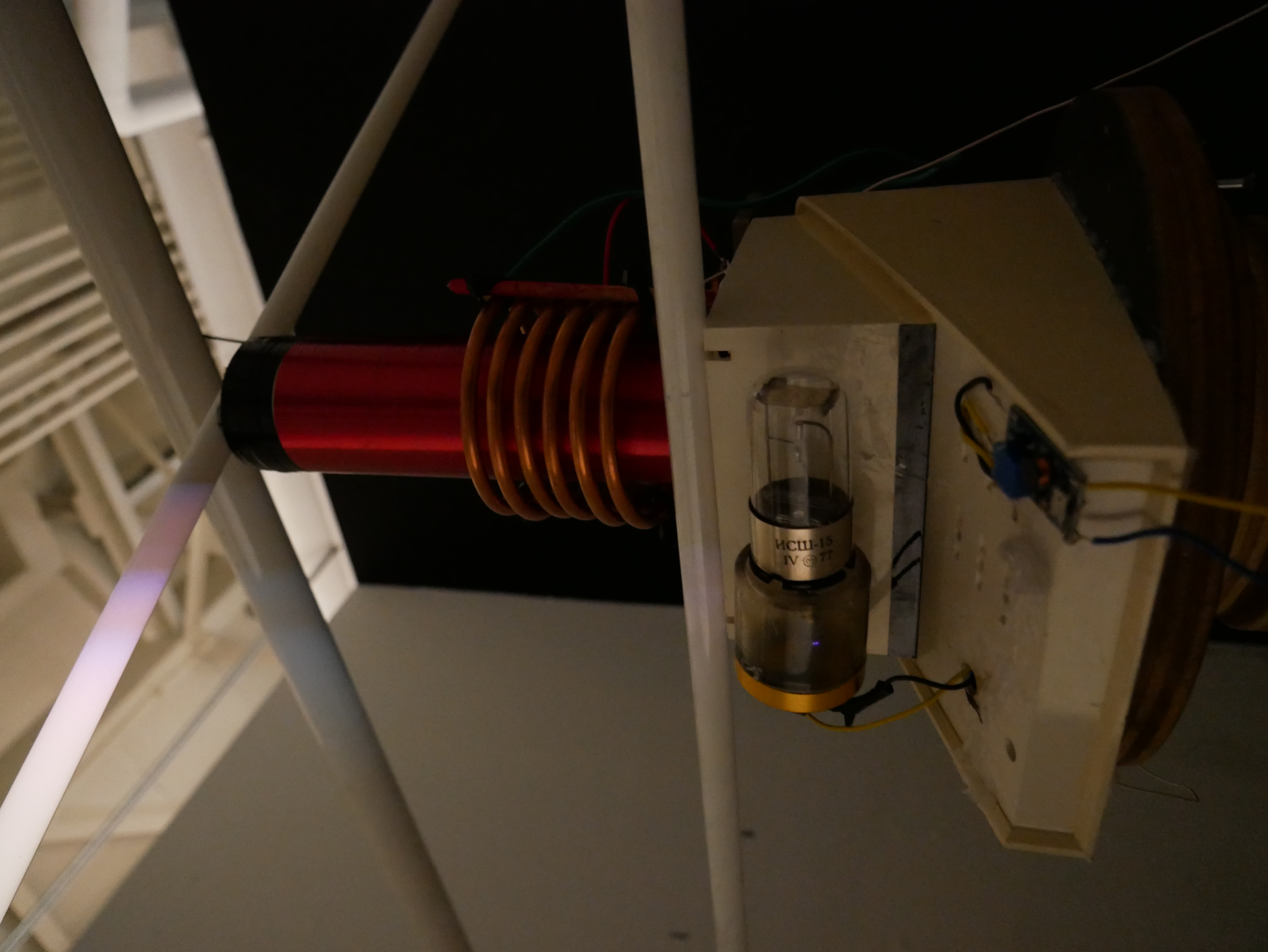
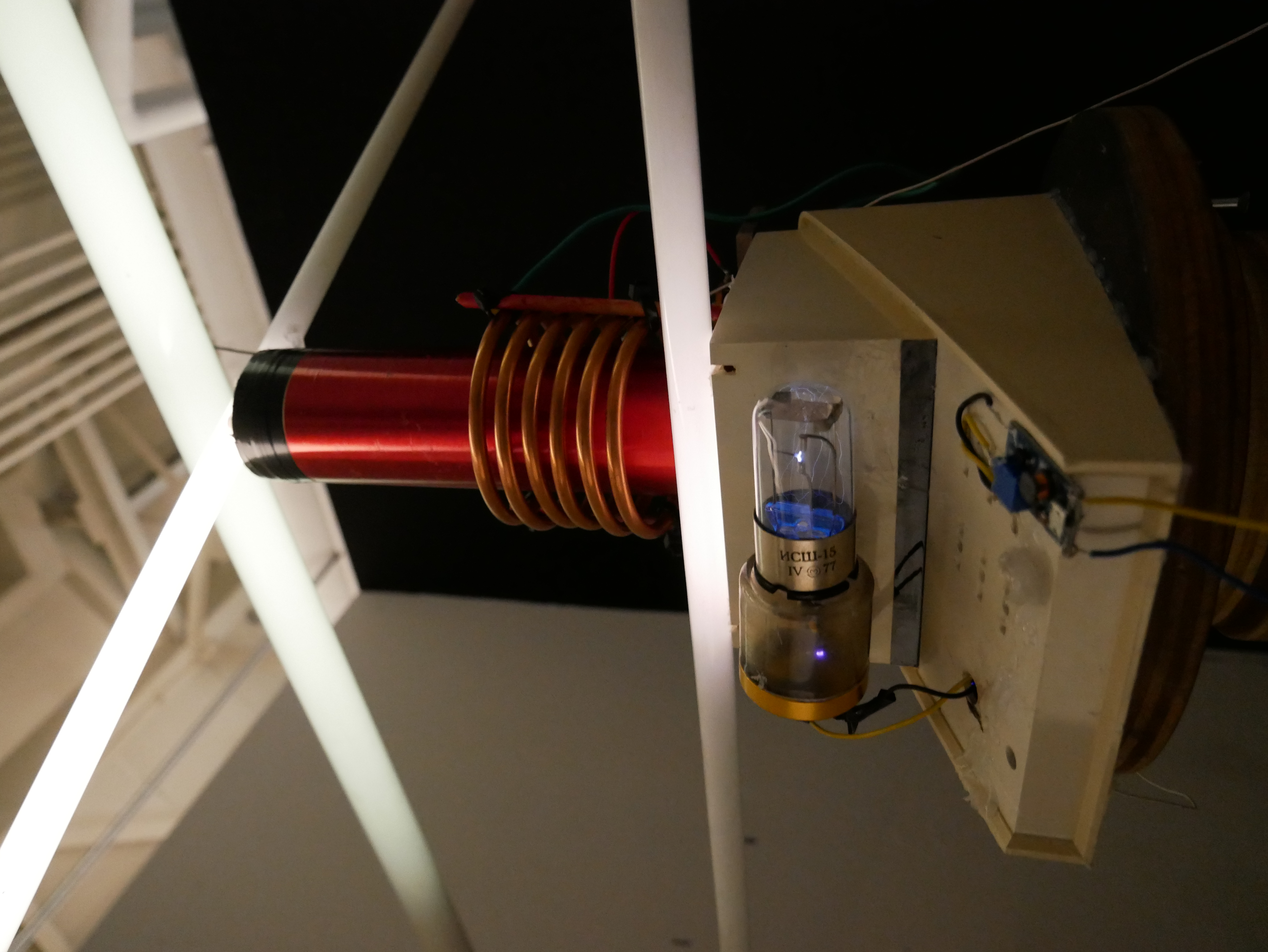
This piece is representational of a living system through items which are far from living. When combined in a specific configuration, it is "alive" — much like a nervous system. A deep thumping emits from the speaker, beating at 1.5 HZ, the average BPM of the human heartbeat. When approached, the beating speeds up, reactively. As if this artificial nervous system is aware of your presence.
Simultaneously to the mechanical oscillations of the human heartbeat, electrical signals are traversing our neurons and nervous system at extraordinary speeds — this is shown in the wirelessly lit fluorescent bulbs. The bulbs are being lit up (excited) by a transformer, stepping up pulsed DC voltage into high frequency alternating current. This transformer is called a Tesla Coil. I calculated on the installation floor that the electricity is oscillating at 542 thousand hertz (542KHZ), hence the title, 1.5HZ/542KHZ.
These systems are symbiotic — one cannot exist without the other, similarly to our own physicality and existence. Your heart beats at roughly 1.5Hz, this fuels the firing of neurons in your brain, 'beating' much faster.
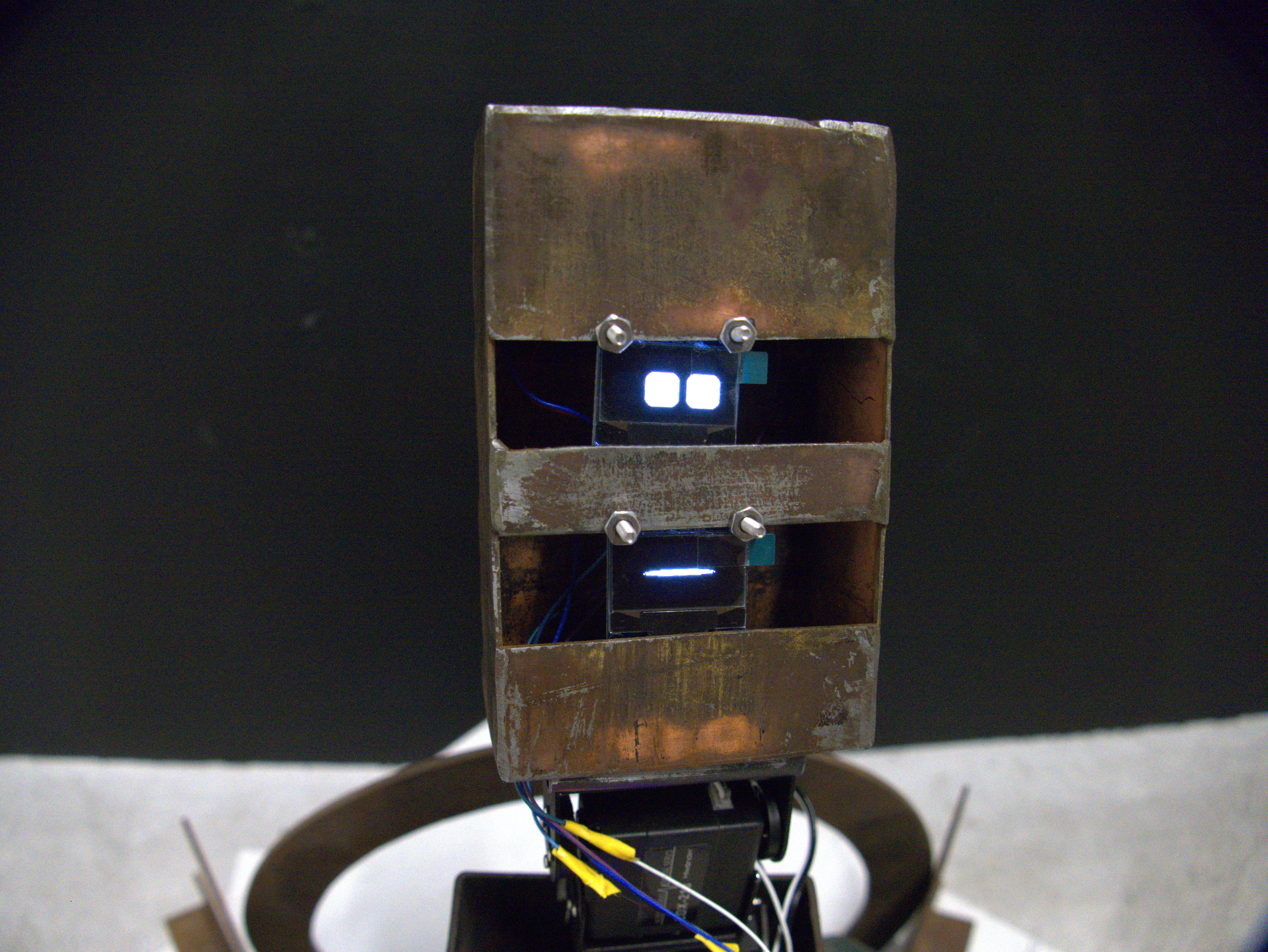
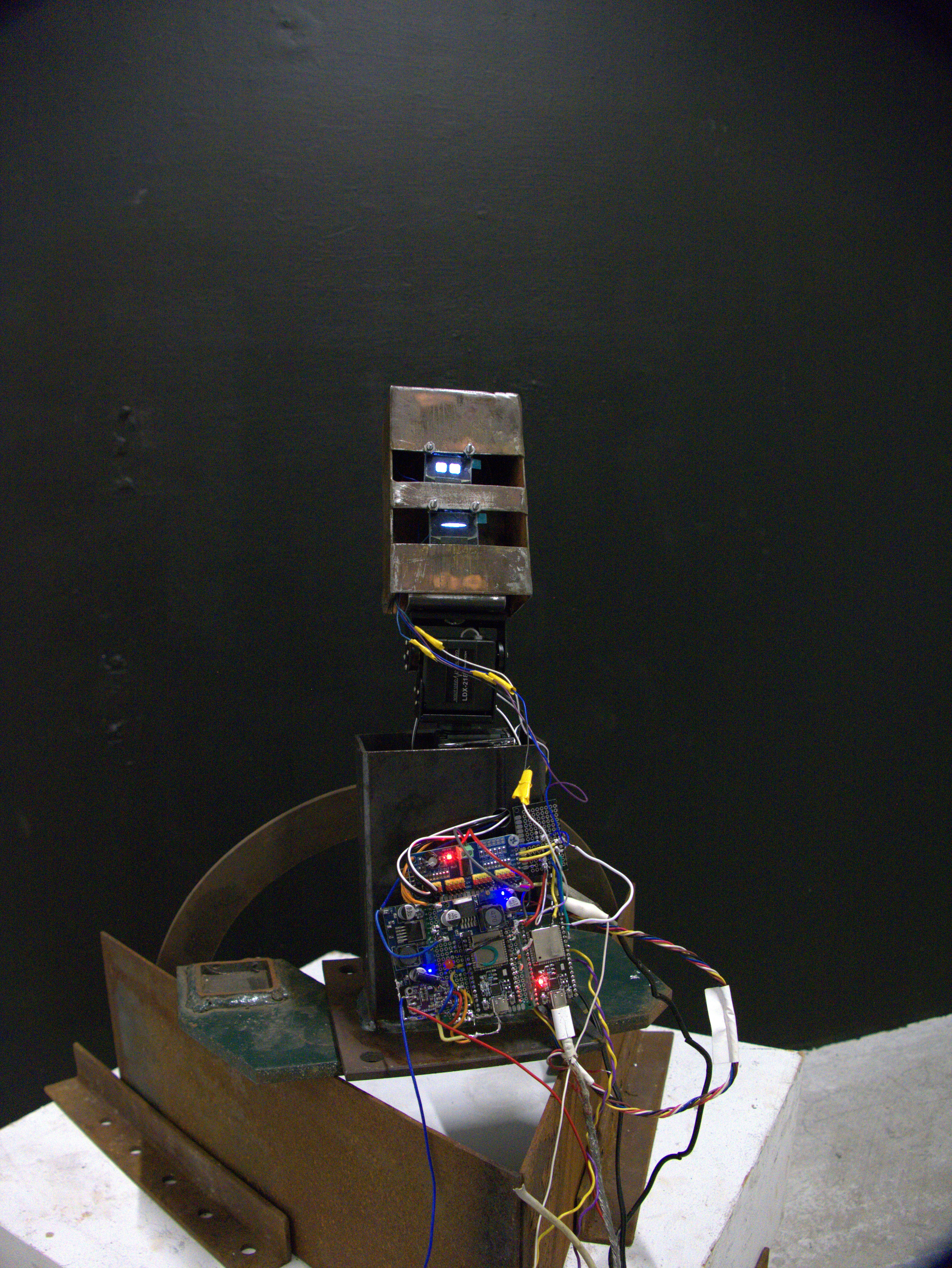

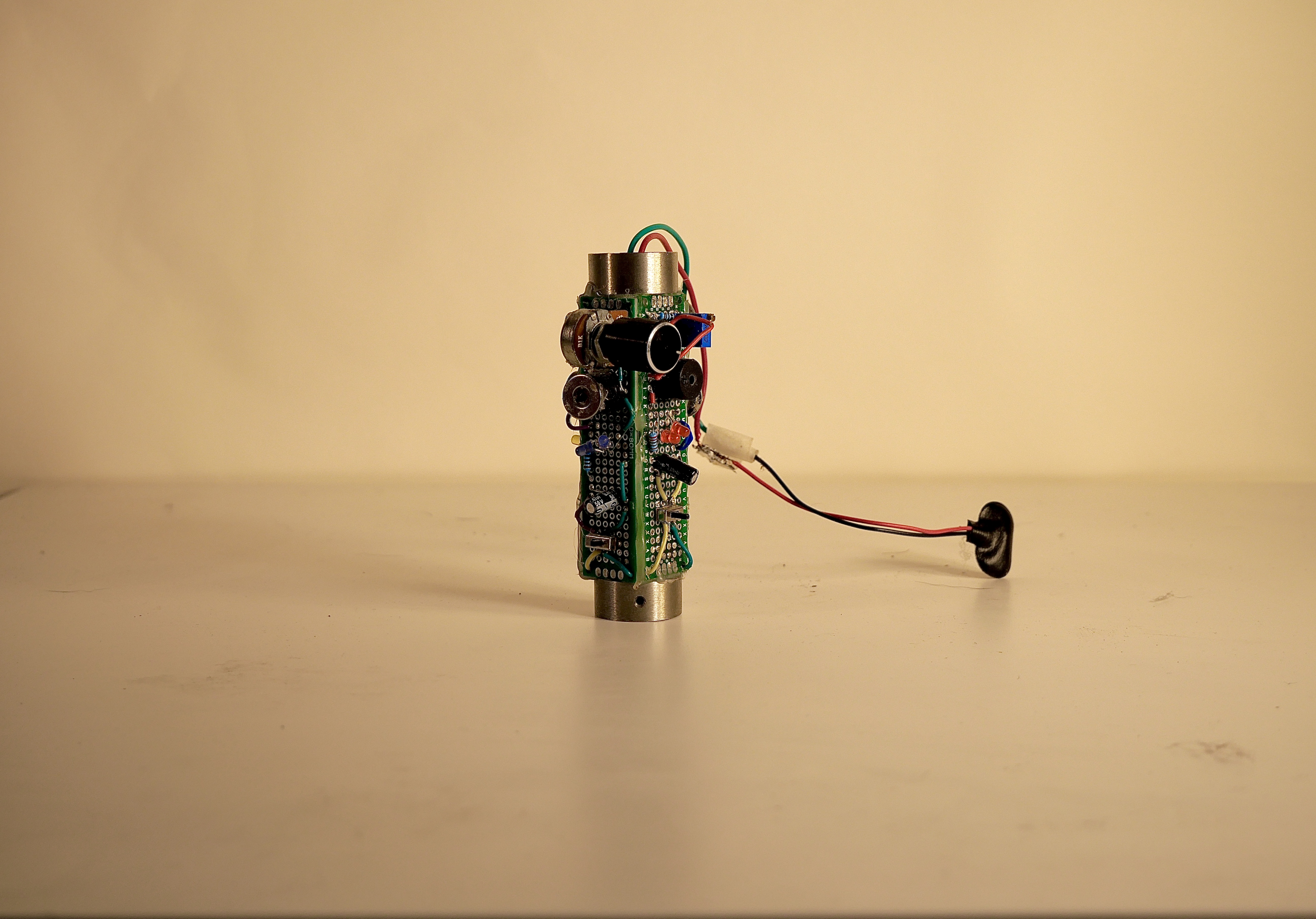
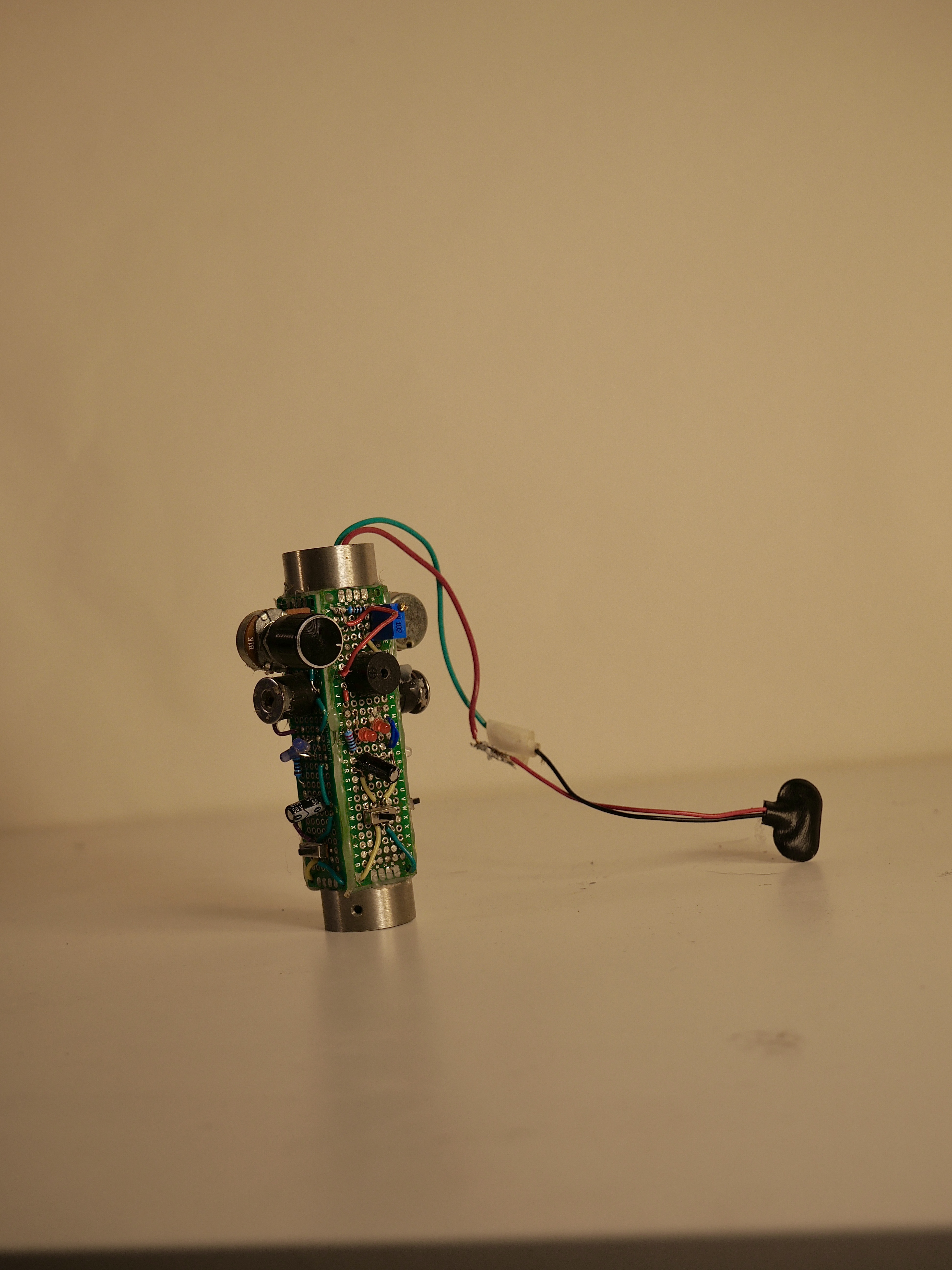
PCBs, wire, resistors, capacitors, potentiometers, LEDs, active piezo electric buzzer, stainless steel rods.
This was the first project I made using electronics, and the first circuit I ever designed, in the process of teaching myself in September 2025.
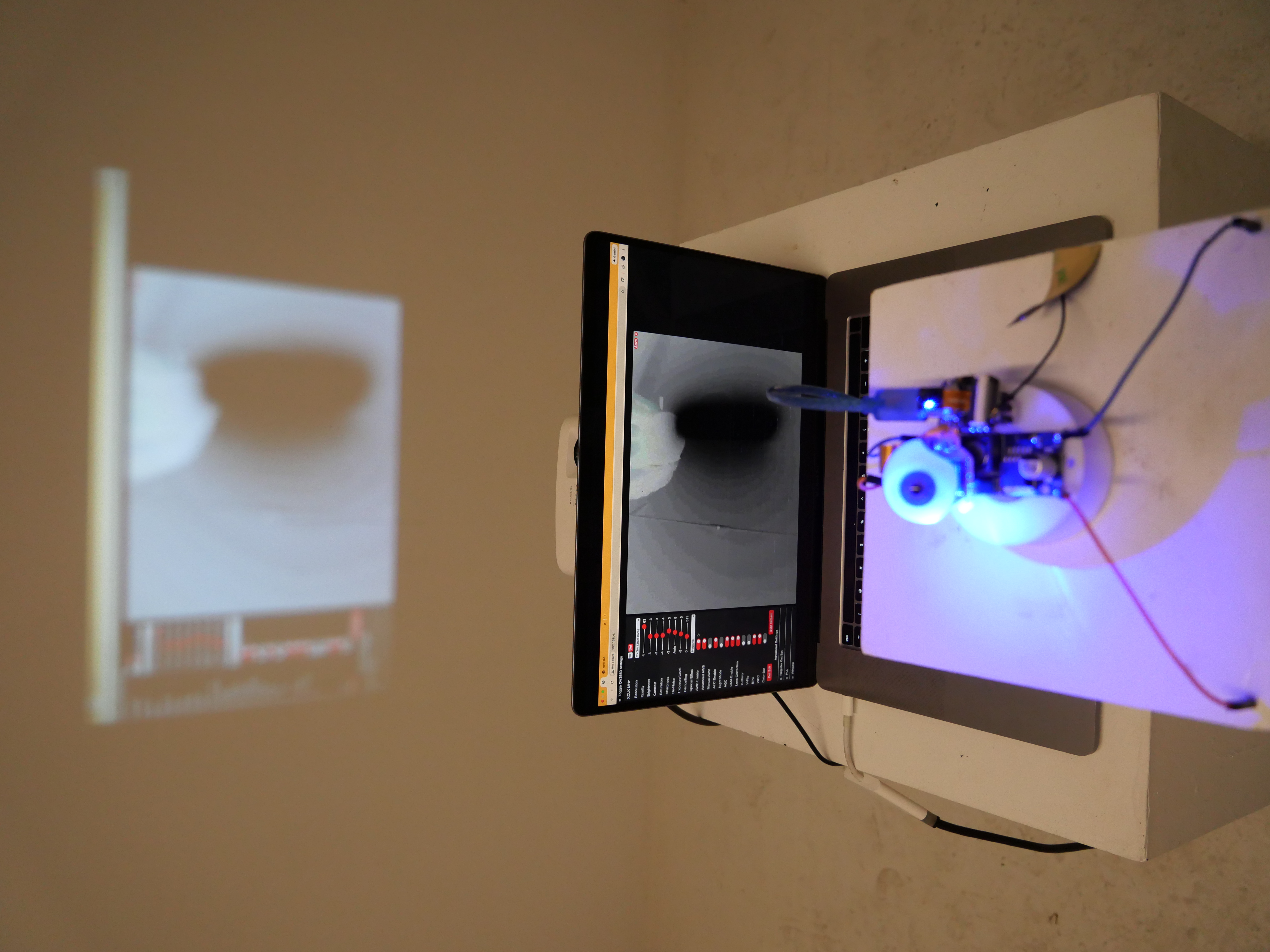
Computer, class 2 laser, glass eye, jumper cable, SEEED Studio's S3 sense.


Roofing tin, acrylic paint, screws, black caulk.


Steel (forged)
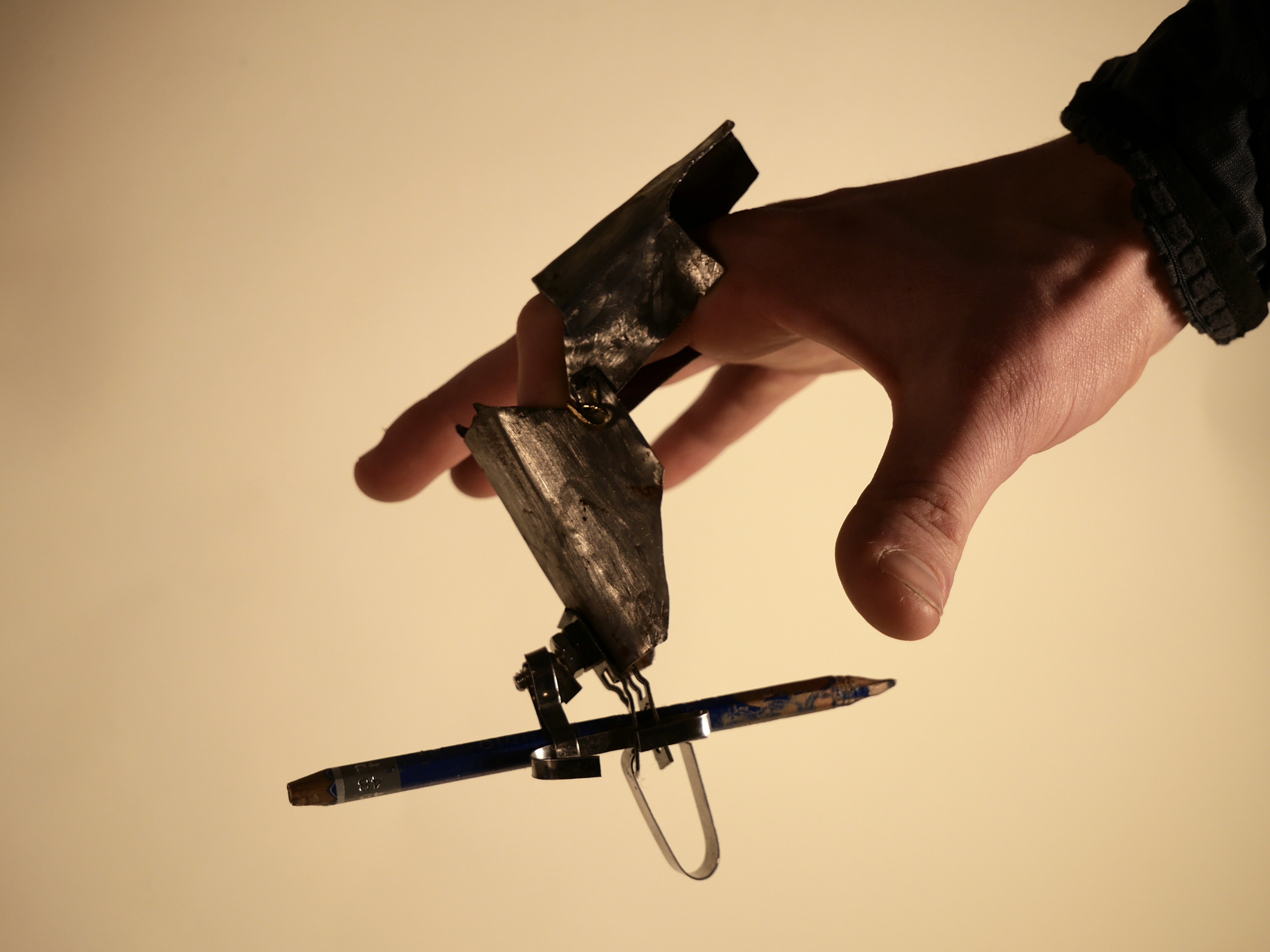

16 gauge cold rolled steel, brass, mechanical screws, pencil.